





What's Happening?
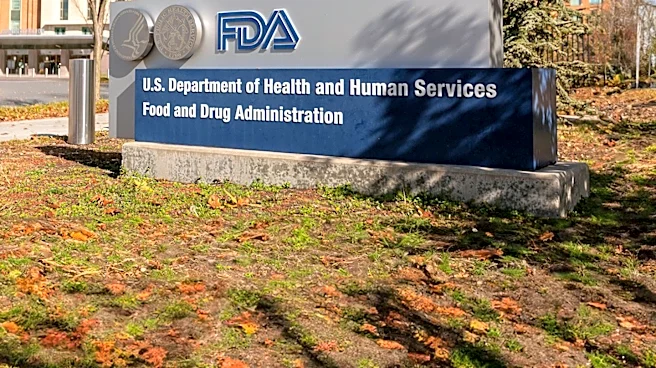
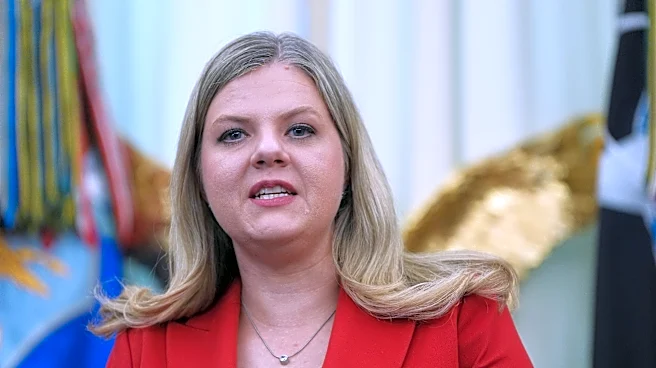
President Trump has nominated Dr. Heidi Overton, a White House aide and deputy director of the Domestic Policy Council, to lead the Food and Drug Administration (FDA). Dr. Overton, a medical doctor with a doctoral degree in clinical investigation, has been
a key figure in advancing President Trump's health initiatives during his second administration. Her nomination follows the resignation of the previous FDA head, Dr. Marty Makary, in May, leaving behind several unfinished projects. Dr. Overton has actively promoted President Trump's health priorities, including 'most favored nation' deals with drug companies to lower prices and a recent vaccine order aimed at splitting the combined measles, mumps, and rubella (MMR) vaccine into three separate immunizations, a move that goes against the advice of medical groups. She has also been critical of abortion pills and is positioned to potentially roll back FDA rules that have made them more accessible. Her nomination has drawn criticism from Democratic senators, with Washington Sen. Patty Murray calling her a 'far-right, anti-abortion extremist' unfit to lead the FDA.
Why It's Important?
Dr. Overton's nomination is significant as it signals a potential shift in the FDA's regulatory approach, aligning it more closely with President Trump's and Health Secretary Robert F. Kennedy Jr.'s health agendas. Her past involvement in initiatives like the MMR vaccine order and her stance on abortion pills suggest a move towards policies that may diverge from established scientific consensus and public health recommendations. This could have profound implications for public health, pharmaceutical companies, and access to certain medical treatments in the U.S. The pharmaceutical industry will be closely watching for changes, especially after recent rejections or reversals of biotech drugs. The nomination also highlights the ongoing tension between political priorities and scientific independence within federal agencies. If confirmed, Dr. Overton will face the challenge of balancing competing interests from the administration, traditional Republicans, and the anti-corporate stance of Health Secretary Kennedy, while also addressing the agency's ongoing reviews of ultraprocessed foods, antidepressants, and vaccine safety.
What's Next?
Dr. Heidi Overton's nomination will proceed to the Senate for confirmation. She will face questioning from the Senate Health, Education, Labor and Pensions Committee, which is chaired by Republican Sen. Bill Cassidy, a physician who has been critical of some of President Trump's actions regarding vaccinations. Given the narrowly Republican-led Senate, her confirmation is not guaranteed and is likely to be a contentious process. If confirmed, Dr. Overton will immediately confront a range of challenges, including addressing the unfinished projects left by her predecessor, Dr. Makary, such as work on ultraprocessed foods, antidepressants, and COVID-19 shots. She will also need to navigate the priorities of Health Secretary Kennedy's 'Make America Healthy Again' movement, which includes decisions on peptide regulation and the finalization of a definition for ultraprocessed foods. The FDA also has ongoing investigations into foodborne illness outbreaks, which will require immediate attention.
Beyond the Headlines
The nomination of Dr. Heidi Overton to lead the FDA extends beyond typical policy debates, touching upon fundamental questions of scientific integrity, public trust in health institutions, and the role of political influence in regulatory bodies. Her alignment with President Trump's and Health Secretary Kennedy's views, particularly on issues like vaccine efficacy and abortion access, could erode public confidence in the FDA's impartiality and its evidence-based decision-making processes. The potential for the FDA to prioritize political agendas over scientific consensus could have long-term consequences for public health outcomes and the U.S. healthcare landscape. Furthermore, the emphasis on 'experiences' in the current economic climate, as seen in other sectors, might also subtly influence how the FDA communicates its decisions, potentially framing health policies in ways that resonate with broader public sentiment rather than purely scientific data. This could lead to a more politicized approach to health regulation, impacting everything from drug approvals to food safety standards.