



What's Happening?
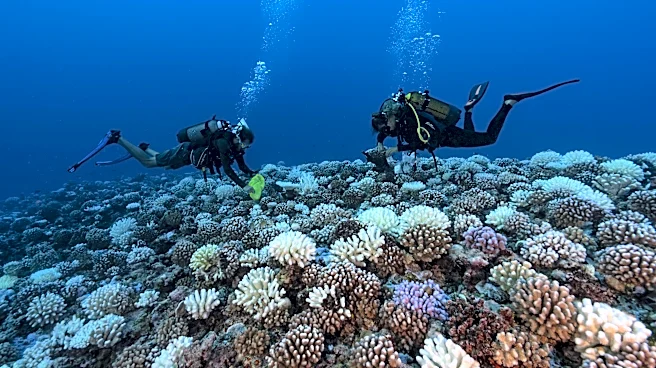
A recent survey of the Puerto Morelos fringing reef in Mexico, published in Frontiers in Marine Science, reveals significant variability in hard coral cover across different sites. Researchers from the National Autonomous University of Mexico (UNAM) found
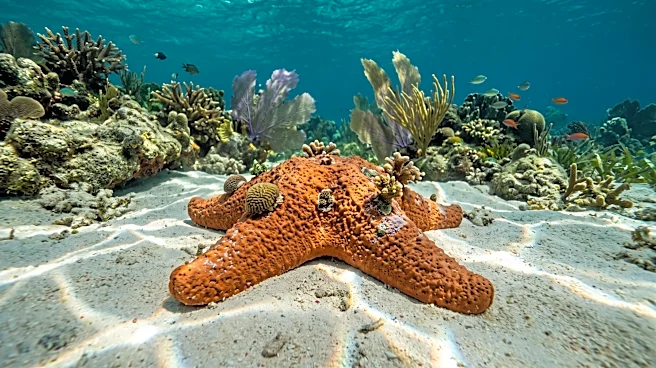
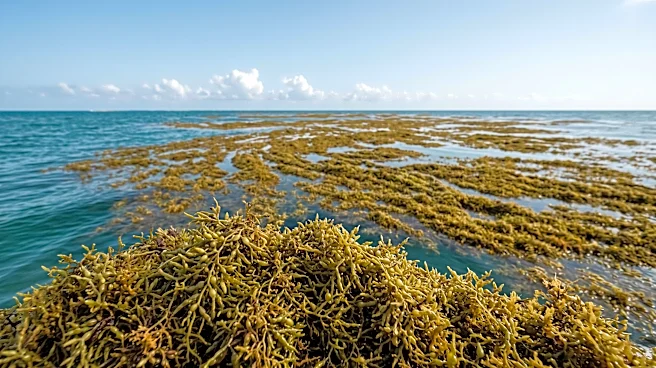
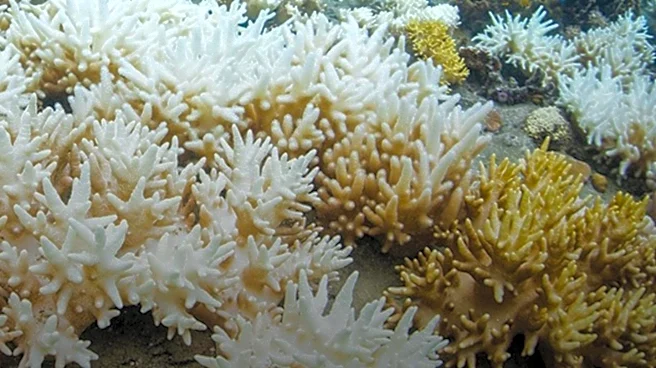
hard coral cover ranging from 0.2% to 24% across eight sites within the national park. The study, conducted across three seasons in 2024, indicates that 'algae-dominated reef' is not a uniform condition, with sites exhibiting different states that shift seasonally. While one site, Limones, showed relatively higher hard coral cover (16.5% to 24.3%), most other sites had significantly lower percentages. A separate, unreviewed preprint by Alvarez-Filip and colleagues noted near-universal bleaching across taxa and sites in the 2023 heatwave, with acute mortality concentrated in Acropora and Millepora. However, the current survey cannot directly attribute its findings to the 2023 bleaching event due to the lack of a direct pre-2023 baseline. The study also found that turf algae mixed with sediment and fleshy macroalgae dominate much of the reef, with seasonal reshuffling of these components.
Why It's Important?
The findings underscore the complex and heterogeneous nature of coral reef health, even within a single protected area. The variability in coral cover and the dominance of algae highlight the ongoing degradation of Caribbean reefs, which are crucial for marine biodiversity, coastal protection, and local economies reliant on tourism and fisheries. The study's emphasis on spatial and seasonal differences challenges the notion of a uniform reef state, suggesting that conservation and management strategies need to be highly localized and dynamic. The observed low coral cover in many areas, coupled with widespread bleaching events, indicates a continued decline in reef resilience. This degradation can lead to reduced coastal protection against storms, impacting infrastructure and human settlements, and can disrupt marine ecosystems, affecting fish populations and the broader food web. The lack of direct correlation between herbivore groups and overall benthic composition, except for excavator parrotfish, further complicates management efforts aimed at controlling algal growth.
What's Next?
The authors recommend a more comprehensive monitoring design that includes spatial replication, seasonal sampling, and detailed herbivore monitoring, incorporating abundance, size structure, and direct grazing measures. Future research should also integrate data on benthic resources, sediment loads, and environmental conditions to better understand the drivers of reef health. This detailed approach is crucial for developing effective conservation strategies that account for the localized and dynamic nature of reef ecosystems. Policymakers and conservation organizations will need to consider these nuanced findings when implementing interventions, such as managing fishing practices for herbivorous fish or addressing land-based pollution. The ongoing threat of marine heatwaves and their impact on coral bleaching necessitates continued research into coral resilience and potential restoration techniques, including the identification of heat-tolerant coral species.
Beyond the Headlines
The study implicitly raises questions about the effectiveness of current marine protected areas in safeguarding coral reefs from broader environmental stressors like climate change and localized pollution. While the Puerto Morelos reef is a national park, its varied health suggests that designation alone is insufficient without addressing external pressures. The finding that 'heterogeneity is not evidence of resilience' is a critical insight, challenging assumptions that patchy survival indicates overall robustness. This implies that even seemingly diverse reefs may be vulnerable to collapse if underlying stressors are not mitigated. The study also touches upon the impact of sewage from coastal development, linking it to rising nitrogen isotope values in coral, which points to the broader issue of land-sea connectivity and the need for integrated coastal zone management. The economic implications for tourism-dependent regions are significant, as degraded reefs diminish their appeal and protective capacity, potentially leading to long-term economic instability.