





What's Happening?
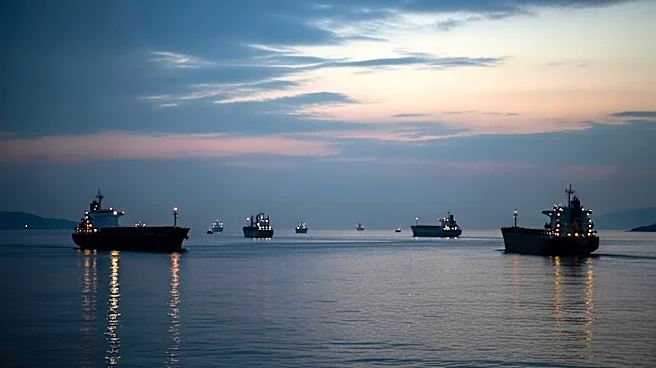
Two ships, part of Iran's 'shadow fleet' and sanctioned by the United States, have successfully navigated through the Strait of Hormuz. The vessels, Ocean Jet and Lumina Ocean, are on a U.S. sanctions list due to their involvement in Iran's sale of drones
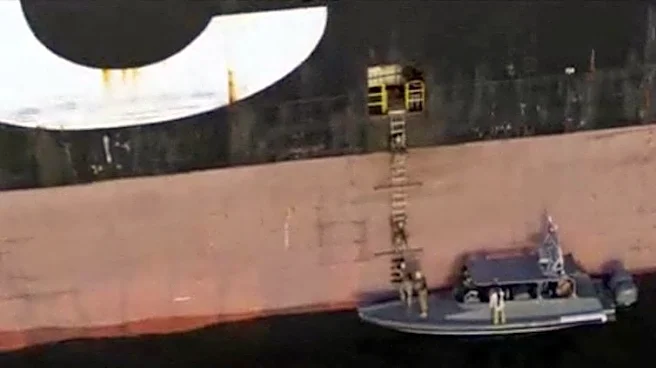
to Russia, which are used in the conflict in Ukraine. Despite the U.S. naval blockade initiated on April 12 to pressure Iran, these ships managed to pass through the strategic waterway undeterred. The U.S. Central Command reported intercepting another vessel, the M/V Sevan, in the Arabian Sea, which was redirected back to Iran. This development comes amid ongoing tensions and a cease-fire agreement between the U.S. and Iran, following Iranian drone and missile attacks on ships.
Why It's Important?
The passage of these sanctioned vessels through the Strait of Hormuz highlights the challenges in enforcing international sanctions and maintaining maritime security in a geopolitically sensitive region. The Strait is a critical chokepoint for global oil trade, and any disruption can have significant implications for global energy markets. The U.S. blockade aims to curb Iran's economic activities and pressure its government, but the ability of these ships to navigate the Strait suggests potential gaps in enforcement. This situation underscores the complexities of international maritime law and the strategic importance of the Strait in global trade and security dynamics.
What's Next?
The U.S. is likely to continue its naval operations in the region to enforce the blockade and prevent further sanctioned vessels from passing through the Strait. The international community may increase diplomatic efforts to address the tensions between the U.S. and Iran, potentially involving negotiations to ensure maritime security and compliance with sanctions. The situation may also prompt discussions on enhancing maritime surveillance and enforcement mechanisms to prevent similar incidents in the future.
Beyond the Headlines
The incident raises questions about the effectiveness of sanctions as a tool for international diplomacy and conflict resolution. It also highlights the strategic maneuvers employed by nations to circumvent economic restrictions, which can undermine global efforts to maintain peace and security. The ongoing tensions in the region could lead to a reevaluation of international maritime policies and the role of naval power in enforcing geopolitical objectives.