

What's Happening?
U.S. Senate Democratic Leader Chuck Schumer and U.S. Senator Kirsten Gillibrand have announced over $13.2 million in federal funding for numerous fire departments across Upstate New York. This substantial financial injection, totaling $13,230,088.46,
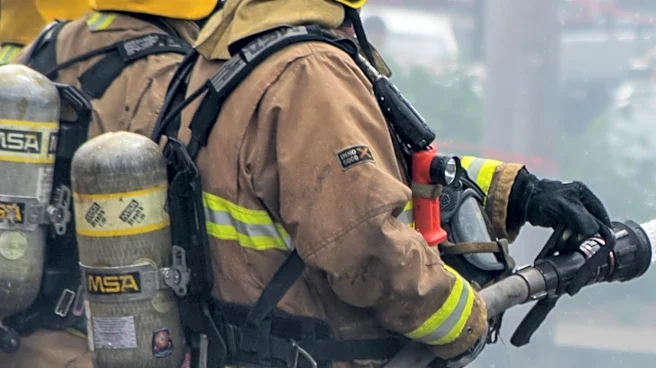
is designated to equip emergency personnel with essential protective gear, provide critical training, and supply necessary resources. The funding is being administered through the U.S. Department of Homeland Security’s Federal Emergency Management Agency (FEMA) via its Assistance to Firefighters Grant (AFG) and Staffing for Adequate Fire and Emergency Response (SAFER) programs. Senator Schumer played a pivotal role in the creation of these programs, and both senators have actively advocated for their preservation and continued funding. Fire chiefs from various departments, including Syracuse and North Tonawanda, expressed gratitude, highlighting how the funds will enhance safety and operational capabilities, such as advanced driver training and paramedic certification.
Why It's Important?
This federal funding is crucial for enhancing the operational readiness and safety of fire departments across Upstate New York, directly impacting the communities they serve. Firefighters frequently face budget shortfalls and high costs for modern equipment and training, making these federal grants a lifeline. The AFG and SAFER programs address these challenges by providing competitive grants that help departments acquire essential resources, thereby improving their ability to respond effectively to emergencies. For instance, the Syracuse Fire Department will use $857,024 for extensive driver training to mitigate traffic collision risks, a significant occupational hazard for firefighters. Similarly, the North Tonawanda Fire Department will utilize $488,020.48 to send firefighters to a Paramedic Certification Program, expanding Advanced Life Support capabilities. This investment not only safeguards first responders but also enhances public safety by ensuring better-equipped and trained emergency services.
What's Next?
The allocated federal funding will now be distributed to the dozens of fire departments across Upstate New York, enabling them to proceed with planned procurements of protective gear, implement training programs, and acquire necessary supplies. Departments like Syracuse and North Tonawanda will begin utilizing their specific grants for initiatives such as advanced driver training and paramedic certification, respectively. The continued success and impact of these programs will likely reinforce the arguments for their ongoing federal support and funding in future legislative sessions. Senator Schumer's past efforts in leading the passage of the bipartisan Fire Grants and Safety Act, which extended funding for AFG and SAFER programs through Fiscal Year 2030, suggest a sustained commitment to these initiatives. Local communities can expect to see tangible improvements in their emergency response capabilities as these funds are put into action.
Beyond the Headlines
Beyond the immediate benefits of improved equipment and training, this federal investment underscores a broader commitment to supporting essential public services and the well-being of first responders. The reliance on federal grants like AFG and SAFER highlights a systemic challenge faced by many local fire departments: the struggle to meet rising operational costs and technological demands with limited local budgets. This situation often forces departments, particularly volunteer ones, to depend on external funding to maintain adequate service levels. The consistent advocacy by senators like Schumer and Gillibrand for these programs reflects an understanding of this critical need and the recognition that robust emergency services are a cornerstone of community resilience. The long-term implication is a potential shift towards more sustained federal involvement in bolstering local emergency infrastructure, ensuring that communities, regardless of their economic standing, have access to well-equipped and highly trained first responders.