

What's Happening?
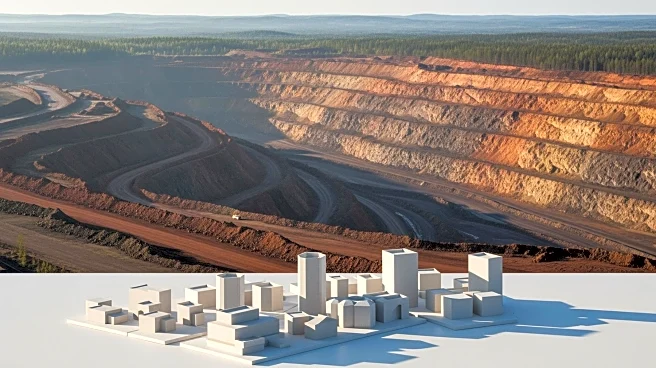
The city of Kiruna in northern Sweden is undergoing a significant relocation process due to the expansion of a large underground iron ore mine operated by the state-owned company LKAB. This move, which involves shifting thousands of residents and buildings,
is part of a multi-decade project expected to be completed by 2035. The relocation is necessary because of ground subsidence caused by mining activities. Kiruna, established 125 years ago for iron ore mining, is a small community that plays a crucial role in Europe's space and mining industries. The city is being moved approximately 3 kilometers east of its current location. The project has garnered international attention, particularly with the recent relocation of the iconic Kiruna Church. The move is driven by the need to accommodate the mine's expansion and the discovery of one of Europe's largest deposits of rare earth elements, which are essential for the green transition.
Why It's Important?
The relocation of Kiruna highlights the complex interplay between resource extraction and community sustainability. The project underscores the economic importance of mining to the region, as LKAB accounts for 80% of all iron ore mined in the European Union. The discovery of rare earth elements further enhances the strategic significance of the area, aligning with the EU's Critical Raw Materials Act, which aims to increase domestic production of essential materials. However, the relocation raises concerns about the impact on local communities, including the indigenous Sami people, and the need for greater financial and political support from the Swedish government and the EU. The project also poses environmental challenges, as the new city location may experience colder temperatures due to its layout.
What's Next?
The relocation process will continue over the next decade, with ongoing negotiations between LKAB, the local municipality, and the Swedish government regarding financial support and land acquisition. The EU's involvement is crucial, as the region's mineral resources are vital for Europe's green transition. The success of the project depends on addressing the concerns of local residents and ensuring sustainable development. The relocation may also serve as a model for other communities facing similar challenges due to resource extraction.
Beyond the Headlines
The relocation of Kiruna raises broader questions about the sustainability of resource-dependent communities and the balance between economic development and environmental preservation. The project highlights the need for comprehensive planning and support to address the social and cultural impacts of such large-scale transformations. It also emphasizes the importance of considering the rights and traditions of indigenous populations in development projects.