What's Happening?
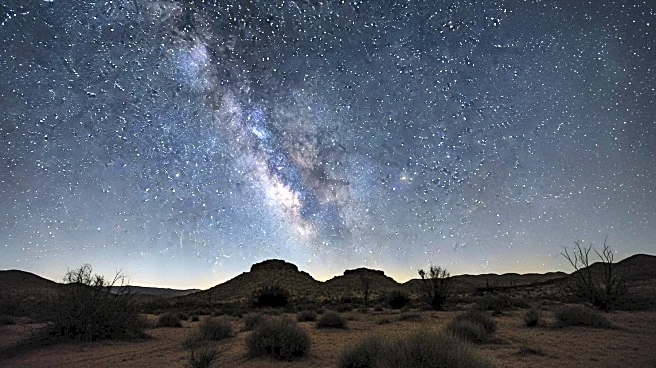
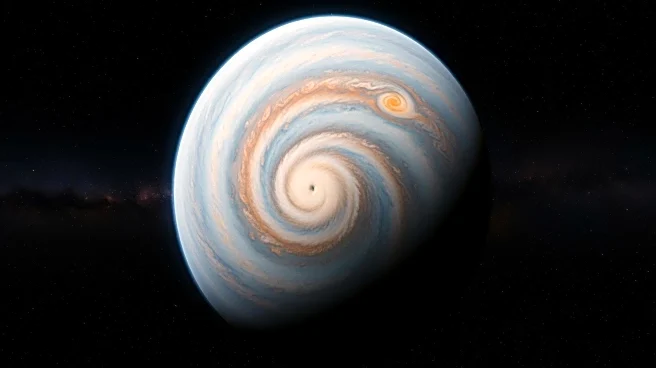
The new moon on January 18, 2026, presents an ideal opportunity for stargazers to observe Jupiter and Saturn in the night sky. With the moon absent, the sky will be darker, enhancing the visibility of these planets and other celestial bodies. According
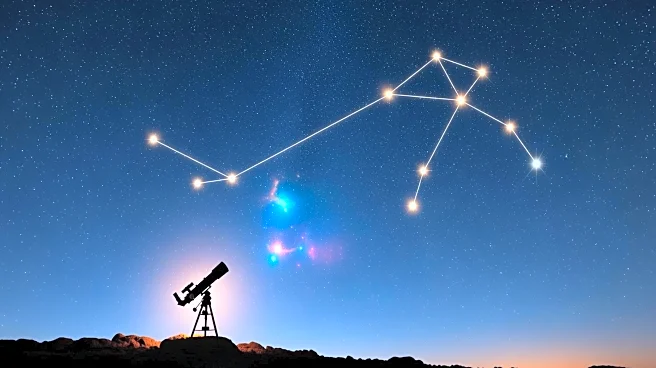
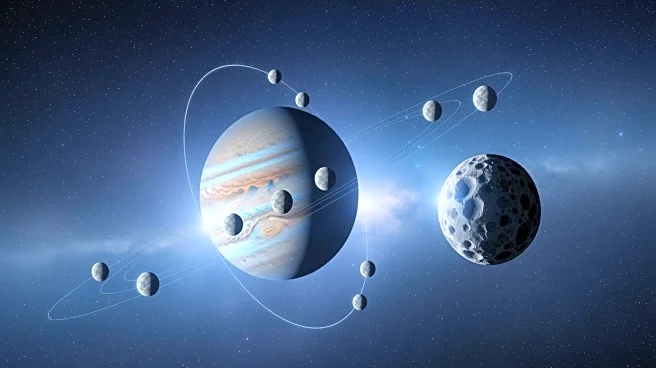
to the U.S. Naval Observatory, the new moon occurs at 2:52 p.m. EST, creating optimal conditions for viewing fainter stars and celestial phenomena. In New York City, Saturn will be visible about 37 degrees above the southwestern horizon by 6 p.m. and will set at 9:48 p.m. Jupiter will rise at 3:58 p.m. and will be visible almost all night, reaching its highest point at 11:23 p.m. This celestial event provides a unique chance for observers to enjoy the winter constellations, including Orion, Gemini, and Taurus, without the interference of moonlight.
Why It's Important?
This astronomical event is significant for both amateur and professional astronomers, as it allows for clearer observations of celestial bodies without the usual light pollution from the moon. The visibility of Jupiter and Saturn, two of the brightest planets, offers a rare opportunity for educational and recreational stargazing activities. This event can inspire interest in astronomy and science, potentially influencing educational programs and public interest in space exploration. Additionally, the event highlights the importance of preserving dark skies, which are increasingly threatened by urban light pollution, impacting both scientific research and the natural environment.
What's Next?
Following the new moon, other planets such as Mercury, Venus, and Mars will gradually become visible as they move out of the sun's glare. Mercury will appear as an 'evening star' in February, followed by Venus in March, and Mars will be visible in the predawn skies by March. These upcoming celestial events will continue to provide opportunities for stargazing and public engagement with astronomy. Observatories and astronomy clubs may organize events to capitalize on these occurrences, fostering community interest and participation in astronomical observations.