


What's Happening?
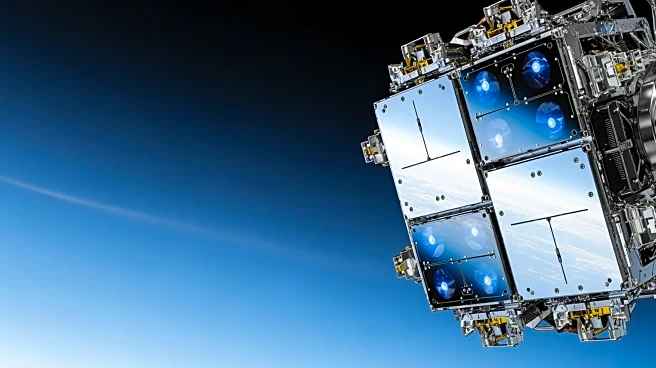
SpaceX has reported a near collision between one of its Starlink satellites and a satellite launched by a Chinese Kinetica 1 rocket. The incident occurred after the rocket deployed nine satellites, one of which came within 200 meters of a Starlink satellite.
SpaceX's Michael Nicolls highlighted the lack of coordination between satellite operators as a significant risk in space operations. CAS Space, the operator of the Chinese rocket, stated that it followed standard procedures to avoid collisions and is investigating the incident. The growing number of satellites in orbit, now over 13,000, increases the risk of such close encounters.
Why It's Important?
The incident highlights the increasing congestion in Earth's orbit and the need for improved coordination among satellite operators. With SpaceX operating nearly 9,300 Starlink satellites, the potential for collisions poses a significant threat to space infrastructure. The lack of shared trajectory data can lead to dangerous situations, risking damage to satellites and creating debris that could trigger the Kessler syndrome, a cascade of collisions rendering parts of orbit unusable. This event underscores the urgency for international collaboration and regulatory frameworks to ensure safe space operations.
What's Next?
CAS Space is coordinating with satellite operators to address the incident and prevent future occurrences. The situation calls for enhanced collaboration between space-faring nations and companies to establish protocols for satellite deconfliction. As the number of satellites continues to rise, the development of global standards for space traffic management becomes increasingly critical. The outcome of this incident may influence future policies and cooperation in the space industry.