


What's Happening?
Countries in the Persian Gulf have closed their airspace in response to Iran's retaliatory strikes on US bases across the region. This action has led to significant disruptions in air travel, with major airlines such as Emirates and Qatar Airways halting
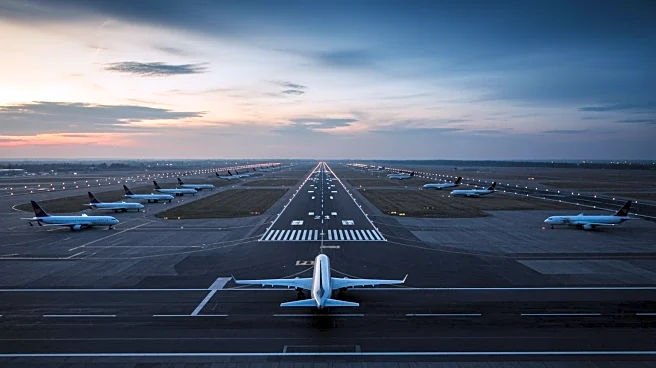
operations. The closures come after US and Israeli strikes on Iran, escalating tensions in the Middle East. Emirates, the largest international airline, has suspended all flights to and from Dubai due to multiple regional airspace closures. Similarly, Qatar's civil aviation authority has temporarily closed its airspace, affecting Qatar Airways' operations. The United Arab Emirates and Kuwait, which were among the countries targeted by Iran's missile attacks, have also closed their airspaces. This unprecedented disruption has resulted in the cancellation of hundreds of flights in some of the world's busiest airports.
Why It's Important?
The closure of airspace in the Gulf region has significant implications for global air travel and regional stability. The Persian Gulf is a critical hub for international flights, and the suspension of operations by major airlines like Emirates and Qatar Airways affects global connectivity. This disruption highlights the vulnerability of international travel to geopolitical tensions. Additionally, the closure of airspace by countries like the UAE and Kuwait underscores the severity of the security threat posed by the escalating conflict between Iran and the US. The situation could lead to increased volatility in the region, affecting not only air travel but also global oil markets and international relations.
What's Next?
The immediate future will likely involve continued monitoring of the situation by airlines and governments. Airlines may need to reroute flights to avoid the affected airspace, potentially leading to longer travel times and increased operational costs. Diplomatic efforts may intensify to de-escalate tensions and restore stability in the region. The international community, including the United Nations, may become more involved in mediating the conflict to prevent further escalation. Additionally, countries in the region may enhance their security measures to protect against potential retaliatory actions.