



What's Happening?
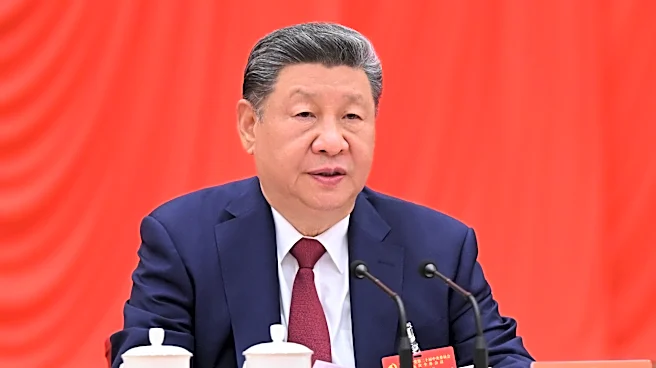
On October 30, 2026, President Xi Jinping held talks with German Federal President Frank-Walter Steinmeier in Beijing during Steinmeier's state visit to China. President Xi highlighted the sustained high-level development of China-Germany bilateral ties
over the past five decades, emphasizing mutual trust and success. He noted that in a world experiencing rapid changes and turbulence, China and Germany, as the world's second and third largest economies, bear significant responsibility for the development of China-EU relations and global economic stability. President Xi called for strengthened communication and coordination to establish a new cooperation paradigm characterized by equality, mutual benefit, and strategic stability. He also stressed China's consistent, stable, and predictable policy toward Germany, welcoming Germany's greater role in European and international affairs. President Xi expressed hope that Germany would maintain an open, positive, rational, pragmatic, and friendly approach to China, providing a fair and non-discriminatory business environment for Chinese companies.
Why It's Important?
The discussions between President Xi Jinping and German Federal President Steinmeier are important for global economic stability and international relations. As major global economies, the cooperation between China and Germany significantly influences the broader China-EU relationship and global economic growth. President Xi's emphasis on mutual respect, understanding, and accommodation underscores a desire to navigate differences through dialogue rather than confrontation, which could set a precedent for other international partnerships. The call for a fair and non-discriminatory business environment for Chinese companies in Germany, and vice versa, directly impacts trade and investment flows, potentially fostering greater economic integration and reducing trade tensions. This dialogue also highlights the ongoing efforts to shape a more just and equitable global governance system, with both nations playing crucial roles in addressing global challenges and promoting multilateralism.
What's Next?
Following these talks, China and Germany are expected to continue high-level exchanges and deepen cooperation in various sectors. President Xi expressed China's readiness to work with Germany in areas such as artificial intelligence, green and low-carbon development, trade in services, and the digital economy. This indicates potential for new joint ventures, technological collaborations, and policy coordination aimed at boosting future competitiveness. Both sides are also expected to support cultural, educational, and artistic exchanges to promote people-to-people connectivity, especially in anticipation of the 55th anniversary of China-Germany diplomatic relations next year. The ongoing dialogue aims to address economic and trade differences through consultation, with the goal of achieving mutual benefit and setting an example for global cooperation. Germany's commitment to the one-China policy and its readiness to work with China on upholding world peace and development suggest continued collaboration on international issues.
Beyond the Headlines
The meeting between President Xi Jinping and German Federal President Steinmeier extends beyond immediate policy discussions, touching upon deeper implications for the global order. President Xi's assertion that "cooperation and consensus outweigh competition and differences" between China and the EU reflects a strategic vision for a multipolar world where dialogue and mutual benefit are prioritized. This approach challenges narratives of increasing geopolitical rivalry and suggests a pathway for major powers to manage complex relationships. The emphasis on shared responsibility for global economic growth and governance underscores a recognition of interconnectedness and the need for collective action on global challenges. Furthermore, the call for a fair business environment and expanded practical cooperation in advanced sectors like AI and green development points to a long-term strategic alignment, potentially shaping future technological and economic landscapes. The exchange of governance experiences between the Communist Party of China and major German political parties also highlights a subtle but significant dimension of international political engagement.