








What's Happening?
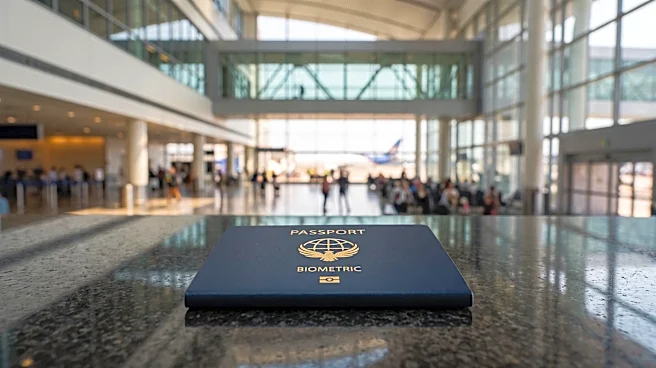
Armenia has taken a significant step towards achieving visa-free travel to the European Union with the launch of new biometric passports on November 1, 2026. European Commissioner for Enlargement Marta Kos announced on November 5 that this development
brings Armenians 'one step closer' to visa-free travel to the EU. A formal ceremony in Yerevan on October 31 marked the introduction of the new biometric system. The European Commission and the Republic of Armenia initiated a visa liberalization dialogue in September 2024. This ongoing process aims to support Armenia in meeting the necessary conditions for well-managed mobility and security, which are prerequisites for establishing a visa-free regime for short stays with the EU. The new biometric passports are expected to expedite border checks and simplify travel for Armenian citizens.
Why It's Important?
This move is crucial for Armenia's aspirations for closer ties with Europe, as highlighted by Marta Kos. Visa-free travel would significantly enhance personal, educational, and business exchanges between Armenia and the EU, fostering deeper integration and understanding. For Armenian citizens, it means greater freedom of movement, reduced travel barriers, and potentially increased opportunities for tourism, education, and economic engagement within the EU. For the EU, it represents a strategic step in its enlargement policy and its commitment to supporting democratic and economic reforms in neighboring countries. The implementation of biometric passports is a key technical requirement that demonstrates Armenia's commitment to international standards of border security and identity management, which are essential for the EU's visa liberalization framework. This development could also encourage further reforms within Armenia to align with EU standards.
What's Next?
The launch of biometric passports is a foundational step, but the visa liberalization dialogue between Armenia and the EU will continue. Armenia must fulfill additional conditions related to well-managed mobility and security before a full visa-free regime can be implemented. This process typically involves comprehensive assessments by EU experts to ensure compliance with various benchmarks, including document security, border management, migration, asylum, and public order and security. The timeline for achieving full visa-free travel will depend on Armenia's progress in meeting these remaining requirements. Continued EU support and Armenia's sustained commitment to reforms will be critical in determining when Armenian citizens can ultimately enjoy visa-free access to the EU for short stays.
Beyond the Headlines
Beyond the immediate benefits of easier travel, the move towards EU visa-free travel carries profound symbolic and geopolitical implications for Armenia. It signals a strengthening of Armenia's westward orientation and its desire for closer alignment with European values and institutions. This shift could have long-term effects on Armenia's foreign policy, economic development, and societal norms. It also underscores the EU's role as a significant partner in the region, offering incentives for reforms and stability. The process of visa liberalization often involves deep institutional changes, impacting areas such as law enforcement, judicial independence, and human rights. Therefore, this development is not just about passports but about a broader transformation of Armenia's governance and its place in the international order, potentially influencing regional dynamics and geopolitical balances.