







What's Happening?
A new study by the Insurance Institute for Highway Safety (IIHS) has revealed a substantial discrepancy between police reports and telematics data regarding cellphone use in traffic crashes across four U.S. states between 2021 and 2024. The study, which
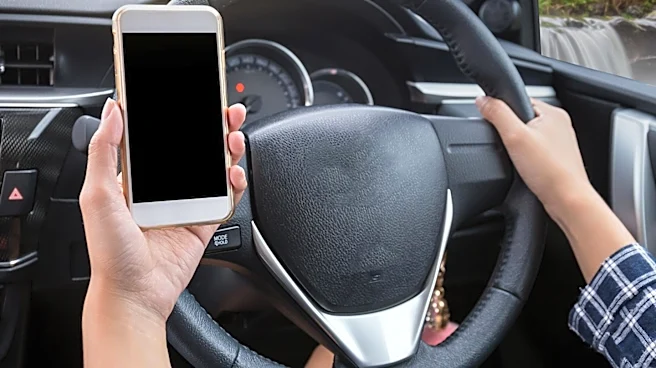
analyzed nearly 17,000 crashes, found that police reports identified cellphone use in less than 1 percent of incidents. In stark contrast, telematics data, collected through safe-driving apps powered by Cambridge Mobile Telematics (CMT), indicated phone activity within 30 seconds of impact in 7 percent of single-vehicle crashes and 8 percent of two-vehicle crashes. This represents at least a seven-fold difference compared to police records. The telematics system can differentiate between handheld calls, hands-free calls, and physical manipulation of the device, as well as whether the phone screen was unlocked. While the study highlights the prevalence of phone activity, it does not definitively conclude that phone use caused these specific crashes.
Why It's Important?
This study is important because it uncovers a significant gap in how distracted driving is currently identified and reported in the U.S. The substantial underreporting by police suggests that the true scope of cellphone-related distraction in crashes is much larger than official statistics indicate. This has critical implications for public safety campaigns, legislative efforts, and insurance policies aimed at reducing distracted driving. If policymakers and law enforcement are operating with incomplete data, their strategies to address this issue may be less effective. For the insurance industry, the findings underscore the potential of telematics data to provide a more accurate risk assessment, potentially influencing premiums and the development of new insurance products. Drivers who voluntarily use safe-driving apps may find their data used in ways that impact their insurance, raising questions about the value of privacy versus potential discounts.
What's Next?
The findings from this IIHS study are likely to prompt further discussion and research into the role of telematics in understanding and combating distracted driving. Law enforcement agencies may explore ways to incorporate telematics data, where legally permissible, to enhance crash investigations and improve the accuracy of their reports. Legislators might consider new regulations or initiatives based on this more comprehensive understanding of distracted driving's prevalence. For the insurance industry, the increased accuracy offered by telematics could lead to more widespread adoption of usage-based insurance programs, where driving behavior, including phone use, directly influences policy costs. Drivers will increasingly need to weigh the benefits of potential insurance discounts against the detailed data collection capabilities of telematics programs before opting in.
Beyond the Headlines
Beyond the immediate implications for crash reporting and insurance, this study touches upon deeper societal and ethical considerations regarding data privacy and surveillance. The ability of telematics systems to create an 'extraordinarily detailed record' of a driver's actions before a crash raises questions about the balance between public safety and individual privacy. While the data analyzed in this study was anonymized and from voluntary participants, the underlying technology has the capacity to track and record extensive personal information. This could lead to debates about data ownership, the extent to which personal data can be used by third parties (like insurance companies), and the legal frameworks required to govern such data collection. The study inadvertently highlights a future where technology could provide unprecedented insights into human behavior, prompting a re-evaluation of privacy norms in the digital age.