
What's Happening?
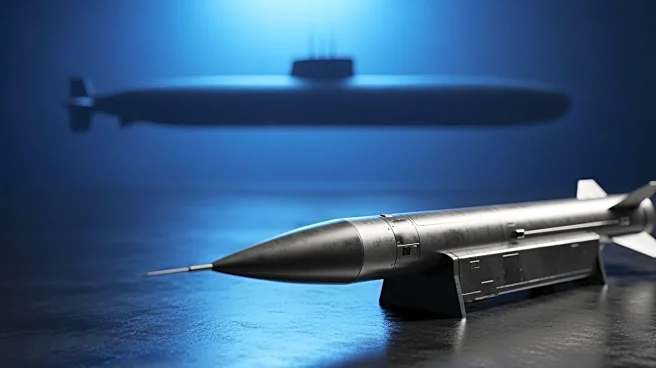
North Korea announced that it has successfully test-fired long-range strategic cruise missiles, as part of its ongoing efforts to enhance its nuclear deterrence capabilities. This development comes shortly
after North Korea showcased progress in constructing its first nuclear-powered submarine. The missile tests were conducted off the country's west coast, with North Korean leader Kim Jong Un expressing satisfaction over the demonstration of the country's military capabilities. The tests are seen as a response to perceived security threats from the U.S. and its allies. South Korea's Joint Chiefs of Staff confirmed awareness of the missile launches and emphasized readiness to counter any provocations through its alliance with the United States.
Why It's Important?
The missile tests underscore North Korea's continued focus on expanding its military capabilities, particularly its nuclear arsenal, which has been a point of contention in international relations. The development of a nuclear-powered submarine and the testing of cruise missiles highlight North Korea's strategic intent to bolster its defense against perceived external threats. This situation poses a significant challenge to U.S. foreign policy and regional stability, as it complicates efforts to resume diplomatic talks aimed at denuclearization. The tests also reflect North Korea's potential strategy to leverage its military advancements in future negotiations with the U.S.
What's Next?
The upcoming Workers' Party congress in North Korea is expected to be a critical event where Kim Jong Un may outline new priorities in the country's foreign relations, particularly with the U.S. Observers will be watching closely to see if North Korea signals a willingness to engage in renewed talks or if it continues to pursue military advancements. The international community, including the United Nations, may respond with calls for restraint and dialogue to prevent further escalation of tensions in the region.