

What's Happening?
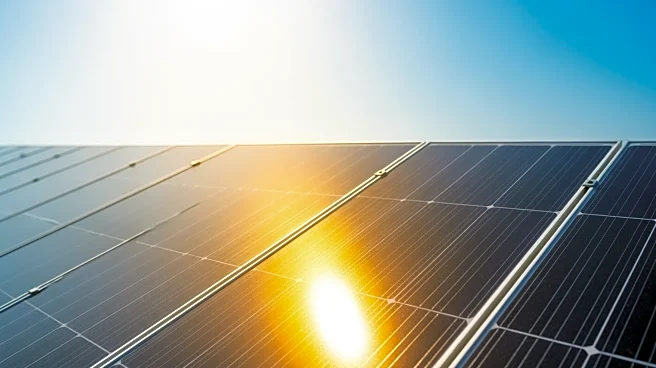
China is phasing out export subsidies for its solar and battery manufacturing sectors, a move that is expected to alter global pricing dynamics. This policy shift is seen as a response to the unsustainability of China's subsidy-driven model. For Indian
manufacturers, this presents an opportunity to compete more effectively as Chinese production costs rise. However, India's solar sector still relies on China for essential components like polysilicon and wafers. India is working towards self-sufficiency with a policy roadmap and investments in backward integration.
Why It's Important?
The reduction in Chinese subsidies could level the playing field for Indian solar manufacturers, allowing them to compete more effectively in both domestic and international markets. This shift could lead to increased competitiveness and growth in India's solar industry, which is crucial for the country's renewable energy goals. However, India's reliance on Chinese components remains a challenge. The development of a robust domestic supply chain and government support will be critical for the sector's long-term success.
What's Next?
India's solar manufacturing sector is poised for growth, but achieving self-sufficiency will require significant policy support and investment in domestic capabilities. The government may need to focus on enhancing research and development, supporting capital-intensive upstream manufacturing, and providing incentives for domestic production. As the global demand for renewable energy continues to rise, India's ability to capitalize on this opportunity will depend on its strategic initiatives and policy framework.