



What's Happening?
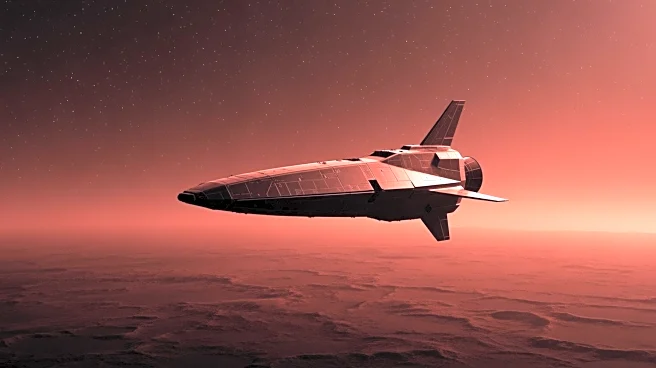
NASA has lost contact with its MAVEN spacecraft, which has been orbiting Mars for over a decade. The loss of communication occurred over the weekend when the spacecraft went behind Mars and failed to reestablish contact upon reemergence. MAVEN, launched
in 2013, has been instrumental in studying the Martian upper atmosphere and its interaction with solar winds. It has also served as a communication relay for the Mars rovers Curiosity and Perseverance. NASA is currently conducting engineering investigations to diagnose the anomaly. Despite this setback, NASA continues to operate two other spacecraft around Mars: the Mars Reconnaissance Orbiter and Mars Odyssey.
Why It's Important?
The loss of contact with MAVEN is significant as it could impact future Mars missions. MAVEN has played a crucial role in understanding the Martian atmosphere, which is vital for future exploration and potential human missions. Its data has helped scientists understand how Mars lost most of its atmosphere, transforming from a wet and warm planet to its current dry and cold state. The spacecraft's role as a communication relay for other Mars missions underscores its importance in NASA's Mars exploration strategy. The loss could necessitate adjustments in communication strategies for ongoing and future missions.
What's Next?
NASA is actively working to diagnose the issue with MAVEN and attempt to reestablish contact. The outcome of these efforts will determine the next steps. If contact cannot be restored, NASA may need to rely more heavily on its other Mars orbiters for communication and data relay. The situation may also prompt a review of current spacecraft maintenance and monitoring protocols to prevent similar occurrences in the future. The scientific community and space exploration stakeholders will be closely monitoring NASA's efforts to resolve this issue.