







What's Happening?
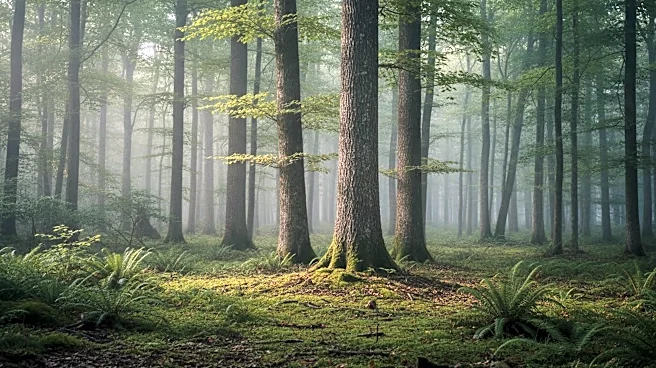
NASA has officially transferred ownership of approximately 105 acres of wooded land, known as Area 400, from its Goddard Space Flight Center in Greenbelt, Maryland, to the Patuxent Research Refuge. This transfer was ceremonially completed on July 7, 2026,
with the signing of certificates by U.S. Fish and Wildlife Service Director Brian Nesvik and Jamie Dunn, the center director of NASA's Goddard Space Flight Center. The land, which was previously used for propellant research since the 1960s, is now part of the largest unfragmented forest block between Washington and Baltimore. The Patuxent Research Refuge, managed by the U.S. Fish and Wildlife Service, is the only refuge in the nation specifically established for wildlife research and also supports various recreational activities. The transfer discussions began in 2021, and the interagency transfer was finalized on February 23, 2026.
Why It's Important?
This land transfer is significant as it enhances conservation efforts and expands recreational opportunities in the region. By integrating this land into the Patuxent Research Refuge, the U.S. Fish and Wildlife Service can further its mission of wildlife conservation and research. The refuge's expansion supports biodiversity and provides a natural habitat for various species, contributing to ecological stability. Additionally, the land's availability for recreational activities like walking, biking, and fishing promotes public engagement with nature and supports community well-being. This move reflects a broader trend of governmental agencies collaborating to optimize land use for environmental and public benefits.
What's Next?
Following the transfer, the U.S. Fish and Wildlife Service will likely focus on integrating the new land into its existing conservation and recreational programs. This may involve habitat restoration projects, enhancing public access, and developing educational programs to engage the community. The successful transfer could serve as a model for future collaborations between federal agencies to repurpose land for conservation and public use. Stakeholders, including local communities and environmental groups, may play a role in shaping the future use and management of the area.