







What's Happening?
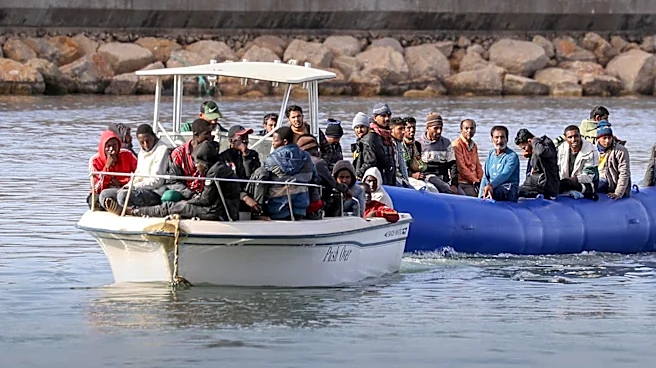
Greek authorities have recovered 12 bodies and rescued 18 individuals from a migrant boat found south of the island of Crete. The vessel was discovered approximately 15 nautical miles (28 kilometers) off the coast on Monday morning. A Moroccan-flagged
cargo ship assisted in the rescue operation. Separately, the Greek coast guard reported finding over 180 people on three other boats heading from North Africa to Crete on the same day. These boats were spotted by an aircraft and drones from the European Union's border agency, Frontex. All individuals from these three boats are being transported to Crete. Greece serves as a primary entry point into the European Union for migrants fleeing conflict and poverty in the Middle East, Africa, and Asia. The route from Libya to Crete has become increasingly active, alongside the shorter but equally dangerous crossings from the Turkish coast to Greek islands in the Aegean Sea.
Why It's Important?
This incident highlights the ongoing humanitarian crisis in the Mediterranean, with the eastern Mediterranean route, particularly from Libya to Crete, becoming a significant and perilous pathway for migrants. The recovery of 12 bodies underscores the extreme dangers faced by individuals undertaking these sea crossings, often in unseaworthy vessels. The continuous flow of migrants, with over 37,000 arrivals in Greece this year surpassing 2025 figures, places immense strain on Greek resources and infrastructure. The involvement of Frontex aircraft and drones indicates a coordinated European effort to monitor and respond to these movements, yet the high number of deaths and rescues points to the overwhelming scale of the challenge. The situation also raises questions about the effectiveness of current border control measures, as migrants continue to seek alternative, often more dangerous, routes to reach Europe.
What's Next?
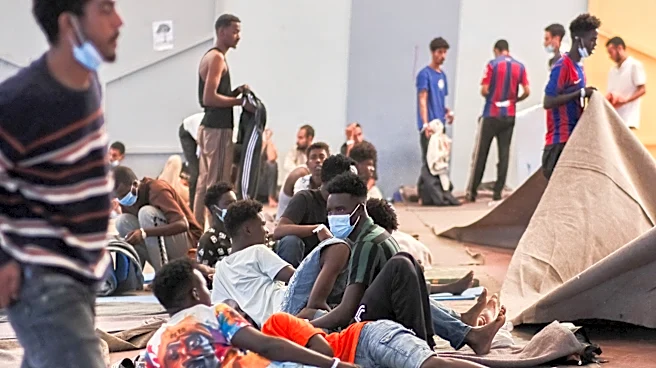
Greek authorities will continue to process the rescued migrants, providing medical attention and shelter. The Greek government has already announced plans to address the influx, including the establishment of a temporary housing complex near Heraklion, the Cretan capital. Investigations into the circumstances of the deaths and the identities of the deceased are expected. The European Union, through agencies like Frontex, will likely maintain or increase surveillance efforts in the eastern Mediterranean. However, without addressing the root causes of migration—such as conflict, poverty, and lack of opportunity in countries of origin—the flow of migrants and the associated tragedies are expected to persist. This ongoing situation will likely necessitate continued international cooperation and humanitarian aid to manage the crisis effectively.
Beyond the Headlines
The recurring tragedies in the Mediterranean reflect a broader global challenge of forced migration and the ethical dilemmas faced by nations. The desperation driving individuals to undertake such perilous journeys often stems from complex socio-economic and political instabilities in their home countries. The increasing reliance on dangerous sea routes, despite heightened surveillance and border controls, suggests that current policies may not be adequately addressing the underlying motivations for migration. This situation also highlights the critical role of international maritime law and humanitarian principles in rescue operations, often placing commercial vessels in the position of first responders. The long-term implications include debates over asylum policies, refugee integration, and the equitable distribution of responsibility among EU member states, as well as the need for comprehensive strategies that combine humanitarian aid with efforts to foster stability and development in migrant-sending regions.