






What's Happening?
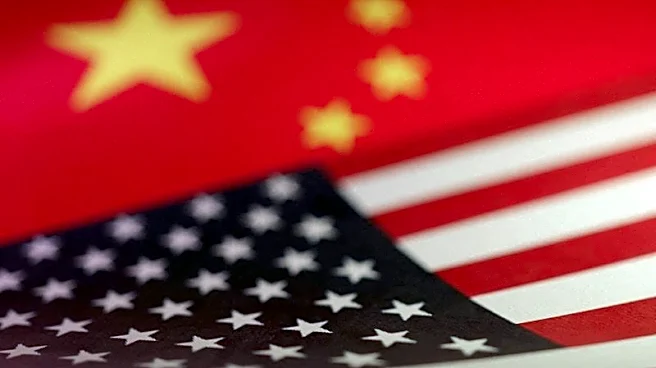
A new report from the 21st Century China Center at the University of California San Diego School of Global Policy and Strategy proposes a strategy of 'selective openness' for Chinese investment in the United States. This approach moves beyond the current
security-first stance, advocating for a more nuanced policy that welcomes investments capable of strengthening U.S. industrial capacity and competitiveness, while simultaneously blocking or safeguarding against those posing national security risks. The report, titled 'Selective Openness: A Framework for Chinese Direct Investment in the United States,' was developed by a working group of 18 experts from academia, industry, and policy. It aims to modernize the U.S. investment review system to weigh both economic benefits and security concerns, distinguishing between beneficial and risky investments.
Why It's Important?
This proposed framework is significant because it challenges the prevailing notion that all Chinese investment inherently poses a national security threat. By advocating for 'selective openness,' the report suggests that a blanket rejection of Chinese capital and technology could be detrimental to U.S. competitiveness, especially in advanced industries where China has become a leader, such as batteries, clean energy, and robotics. The ability to attract carefully structured investments could bring capital, technology, and manufacturing know-how, leading to job creation and enhanced supply chain resilience within the U.S. This approach seeks to optimize the benefits of economic exchange while still protecting legitimate national security interests, offering a more sophisticated strategy for navigating the complex U.S.-China economic relationship.
What's Next?
The report recommends modernizing the Committee on Foreign Investment in the United States (CFIUS) to improve transparency and predictability in investment reviews. It also suggests using enforceable conditions to differentiate between investments that should be prohibited, permitted with safeguards, or actively encouraged. The framework is accompanied by five 'stress tests' examining its application across various sectors, including corporate governance, cybersecurity, clean energy, life sciences, and humanoid robotics. These tests demonstrate how selective openness could be applied through case-by-case assessments and enforceable safeguards. The findings are intended to inform policymakers and contribute to a more effective U.S.-China economic policy that balances security concerns with economic opportunities.
Beyond the Headlines
The 'selective openness' strategy highlights a growing recognition that the U.S. cannot afford to completely disengage from China's economic and technological advancements. Instead, it must develop sophisticated mechanisms to harness potential benefits while mitigating risks. This approach could lead to a more dynamic and competitive U.S. industrial landscape, but it also requires robust regulatory frameworks and intelligence capabilities to effectively distinguish between benign and malicious investments. The ethical and legal implications of such a selective approach are considerable, particularly in defining what constitutes a 'national security risk' and ensuring fair and transparent review processes. Ultimately, this framework could shape the future of global investment flows and redefine the nature of economic competition between major powers.