

What's Happening?
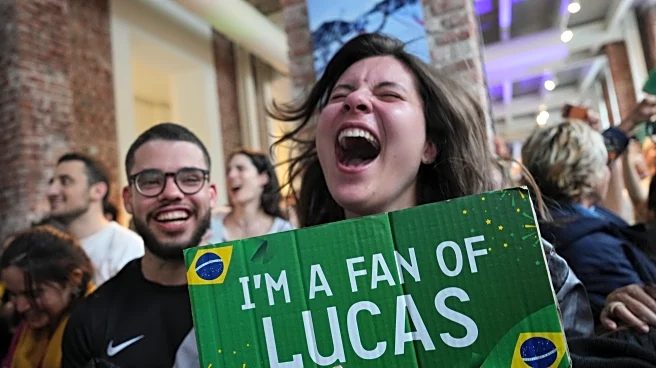
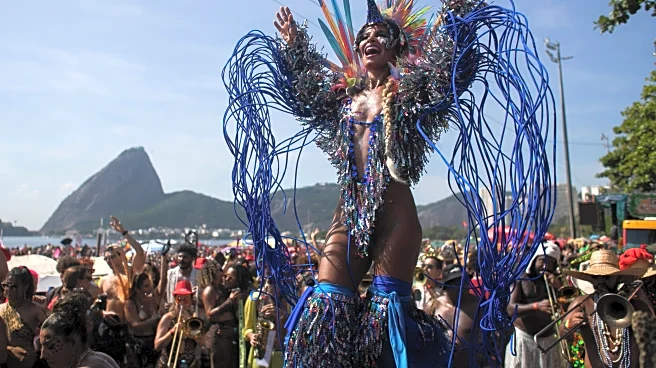
Brazilian President Luiz Inácio Lula da Silva was honored at the Rio Carnival parade by the samba school Academicos de Niteroi, which celebrated his journey from poverty to becoming a prominent leader. The parade featured floats, costumes, and songs praising
Lula, who is seeking his fourth term in office. However, his opponents have raised concerns, alleging that the tribute constitutes illegal early campaigning ahead of the October election. Brazil's top electoral court dismissed these complaints, stating they cannot censor the samba school before the parade but may review the case if any electoral law violations occur during the performance.
Why It's Important?
The celebration of President Lula at the Rio Carnival highlights the intersection of culture and politics in Brazil. While the tribute may bolster Lula's image among supporters, it also raises legal questions about the use of public events for political campaigning. The electoral court's decision to allow the parade reflects the complexities of regulating political activities in cultural contexts. This event could influence public perception and voter sentiment, potentially impacting Lula's chances in the upcoming election. The involvement of Supreme Court Justice Kassio Nunes, appointed by Lula's predecessor Jair Bolsonaro, adds another layer of political dynamics to the situation.
What's Next?
As the electoral court's leadership transitions to Justice Kassio Nunes, the scrutiny of Lula's campaign activities may intensify. The court may review the parade's content for any violations of electoral law, which could lead to fines or other penalties. Lula's opponents may continue to challenge his campaign strategies, seeking to limit his influence in the lead-up to the election. The outcome of these legal proceedings could affect Lula's campaign and the broader political landscape in Brazil.