



What's Happening?
Leaders from Columbia's Downtown District, supported by nearly 80 downtown business owners, organizations, and University of Missouri System President Mun Choi, have formally requested the city to research a potential 'urban camping' ordinance. This request was
submitted to city council members by the Downtown Community Improvement District (CID) at a recent meeting. CID Executive Director Nickie Davis expressed a desire for the ordinance to be finalized within a year, with research completed in the next six months. The proponents argue that such an ordinance would establish clear standards for enforcement and outreach, ensuring consistency for city staff, outreach workers, businesses, and residents. Currently, Columbia has an ordinance prohibiting individuals from blocking streets, alleys, or sidewalks without a parade permit, with violators facing a misdemeanor. A previous version of the request in July highlighted that existing ordinances are 'broad, and difficult to locate or interpret,' leading to confusion among various stakeholders.
Why It's Important?
This initiative is important as it reflects a growing concern among downtown business communities regarding homelessness and public space management. The push for a new 'urban camping' ordinance in Columbia, Missouri, signifies a broader trend in U.S. cities where local governments are grappling with how to address visible homelessness while balancing public safety, business interests, and humanitarian concerns. The proposed ordinance aims to provide clearer guidelines, which could streamline enforcement efforts and potentially lead to more structured outreach to homeless individuals. However, such ordinances often spark debate about criminalizing homelessness and the effectiveness of punitive measures versus supportive services. The involvement of the University of Missouri System President also underscores the potential impact on the broader community, including students and faculty, and highlights the intersection of urban planning, social welfare, and economic development in college towns.
What's Next?
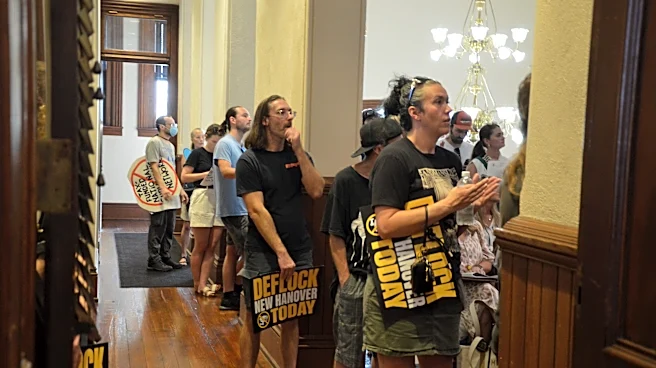
The immediate next step is for the city of Columbia to conduct the requested research into a potential 'urban camping' ordinance. CID Executive Director Nickie Davis hopes this research will be completed within six months, leading to a finalized ordinance within a year. Davis envisions a three-tier educational approach for addressing violations, starting with informing individuals that certain activities are not permitted in specific areas, explaining the reasons, and ultimately, if non-compliance continues, directing them to programs, housing, or safer alternatives. City leaders did not immediately comment on the district's request at the recent meeting, indicating that formal consideration and discussion by the city council will follow the research phase. The development of this ordinance will likely involve public hearings and community input, given the sensitive nature of policies affecting homeless populations.
Beyond the Headlines
The debate surrounding 'urban camping' ordinances often extends beyond immediate public order concerns to deeper societal issues, including the right to public space, the effectiveness of criminalizing homelessness, and the adequacy of social services. While proponents emphasize the need for clear standards and consistency, critics often argue that such ordinances disproportionately affect vulnerable populations and can push homelessness further out of sight without addressing its root causes. The proposed educational approach in Columbia suggests an attempt to balance enforcement with outreach, but the practical implementation of such a system will be critical. This situation also highlights the ongoing tension between urban revitalization efforts, which often prioritize business and tourism, and the needs of marginalized communities. The outcome in Columbia could serve as a case study for other U.S. cities facing similar challenges, influencing how they approach urban planning and social policy in the context of homelessness.