




What's Happening?
Scott Kenney, PhD, an associate professor and researcher at The Ohio State University, has investigated the connection between highly pathogenic avian influenza (HPAI), dairy cattle, and poultry operations. His research, presented at the 2025 Poultry
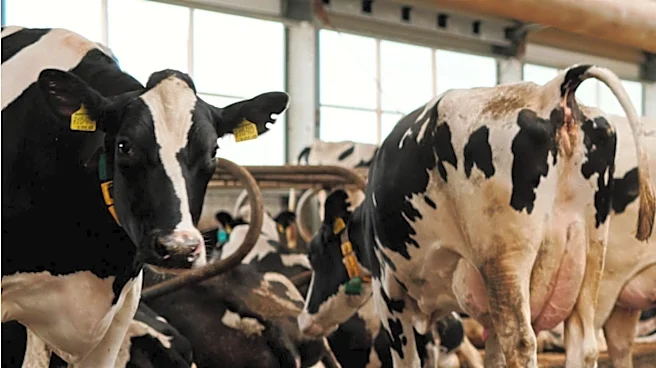
Science Association Annual Meeting, highlights how the H5N1 strain circulating in cattle could pose new challenges for poultry producers through indirect transmission routes and environmental contamination. Historically, avian influenza has circulated for centuries, with modern H5N1 strains identified in China in the late 1990s, eventually infecting mammals by 2021 and subsequently dairy cattle. Dairy cattle frequently interact with wildlife, particularly birds, around feed and water sources, exposing them to contaminated material. A significant finding from a 2024 Michigan outbreak linked infections in dairy cattle to nearby poultry flocks, with similar viral strains identified in both species. Investigators determined that employees working at both dairy and poultry facilities were the likely connection, suggesting fomite contamination via equipment, vehicles, or clothing as the transmission pathway rather than direct cattle-to-poultry spread.
Why It's Important?
This research is crucial for U.S. agricultural industries, particularly the dairy and poultry sectors, as it identifies critical indirect transmission pathways for HPAI. The finding that dairy cattle can shed vast quantities of the virus in milk, potentially creating a substantial environmental reservoir, has significant implications for biosecurity measures. A moderately sized dairy operation with infected animals could theoretically generate hundreds of quadrillions of virus particles daily, increasing the risk of contaminating workers, equipment, wastewater, or wildlife. This environmental contamination poses a direct threat to poultry operations, which are highly susceptible to HPAI outbreaks. The study underscores the need for enhanced biosecurity protocols, especially concerning shared personnel, equipment, and the management of wastewater lagoons that attract wild birds. Failure to address these indirect transmission risks could lead to more frequent and widespread outbreaks, resulting in economic losses for both industries and potential food supply disruptions.
What's Next?
The findings emphasize the urgent need for both the dairy and poultry industries to remain vigilant and implement enhanced biosecurity measures. This includes careful management of workers who interact with both livestock operations, strict sanitation protocols for equipment and vehicles, and continued surveillance for HPAI. While vaccination is an option, particularly for layers, its cost-prohibitive nature and the ongoing danger of wild-to-domestic bird transmissions mean that biosecurity remains paramount. As H5N1 continues to adapt to new hosts, cross-species transmission events may become more common, necessitating ongoing research and adaptive strategies. Future efforts will likely focus on developing more cost-effective vaccination strategies and refining biosecurity guidelines to mitigate the risks identified by Dr. Kenney's research.
Beyond the Headlines
The implications of Dr. Kenney's research extend beyond immediate biosecurity concerns, highlighting the complex ecological interplay between wildlife, livestock, and human activities. The 'curiosity' of cows, leading them to ingest contaminated materials, underscores how natural animal behaviors can inadvertently facilitate disease transmission. The potential for wastewater lagoons to become wildlife watering holes and viral reservoirs points to broader environmental management challenges. This situation also raises ethical considerations regarding the welfare of animals in industrial farming settings and the responsibility of producers to prevent disease spread. The ongoing adaptation of H5N1 to new hosts signals a long-term shift in zoonotic disease dynamics, requiring a more integrated 'One Health' approach that considers human, animal, and environmental health together to prevent future pandemics and protect agricultural sustainability.