




What's Happening?
The top US commander in the Middle East, Adm. Brad Cooper, has expressed the need for more bunker buster bombs to address the growing trend of adversaries burying military assets underground. During a US House Armed Services Committee hearing, Cooper highlighted
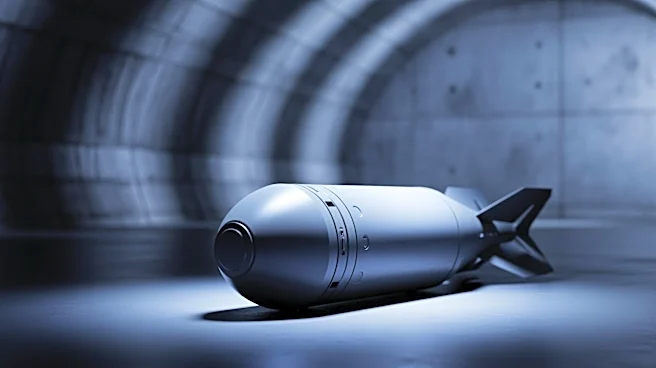
the increasing challenge of striking hardened underground targets, citing Iran's nuclear facilities as a key example. Last year, the US used its largest conventional bunker-buster bombs, the GBU-57, in strikes against Iranian sites. The military is now working on a successor to the GBU-57, aiming for a lighter bomb capable of operating in GPS-denied environments.
Why It's Important?
The development and deployment of advanced bunker buster bombs underscore the evolving nature of military threats and the need for the US to adapt its capabilities. As adversaries increasingly protect key assets underground, the US must enhance its ability to neutralize these threats. This has implications for national security and defense strategy, potentially influencing military spending and technological innovation. The focus on electronic warfare and counter-UAS capabilities also highlights the shifting landscape of modern warfare, where traditional tactics are being supplemented by advanced technology.
What's Next?
The US military is expected to continue developing and procuring advanced munitions to address underground threats. The successor to the GBU-57 is in development, with a focus on improved accuracy and reduced weight. This ongoing effort will likely involve collaboration with defense contractors and further investment in research and development. Additionally, the geopolitical situation in the Middle East remains tense, with potential implications for US military operations and diplomatic relations in the region.