




What's Happening?
The United States military is reportedly experiencing a munitions crisis, with significant depletion of its weapons stocks due to ongoing operations. The Pentagon has allegedly resorted to transferring weapons from Asia and Europe to replenish stockpiles
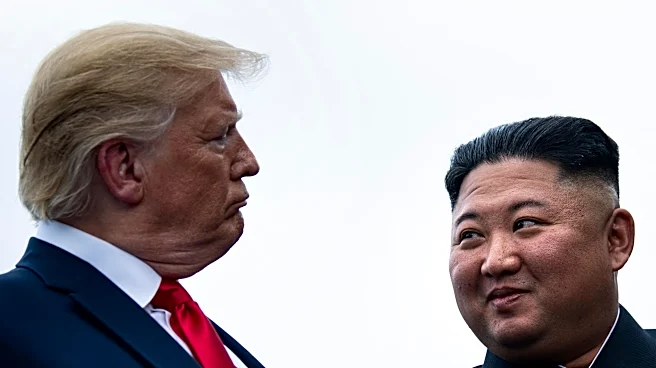
in the Middle East. This situation raises questions about the U.S.'s ability to sustain military operations, particularly against adversaries possessing larger arsenals and more robust defense industrial bases. Concurrently, President Trump has claimed that North Korea possesses 57 nuclear weapons. This figure is subject to debate given the secretive nature of North Korea's nuclear program, but it highlights ongoing concerns about global nuclear proliferation and the challenges of assessing such capabilities.
Why It's Important?
The reported depletion of U.S. munitions stocks has critical implications for national security and global stability. A reduced inventory could hinder the U.S. military's capacity to respond effectively to multiple simultaneous conflicts or prolonged engagements, potentially emboldening adversaries. This situation also places increased pressure on the U.S. defense industrial base to ramp up production, which can be a lengthy and complex process. Furthermore, President Trump's assertion about North Korea's nuclear arsenal, regardless of its accuracy, underscores the persistent threat posed by nuclear weapons and the challenges of non-proliferation efforts. The perceived strength or weakness of U.S. military readiness can influence geopolitical dynamics and the willingness of allies and adversaries to engage in certain actions.
What's Next?
The U.S. military will likely continue to assess its munitions requirements and explore strategies to rebuild its stockpiles. This could involve increased defense spending, accelerated production contracts with defense manufacturers, and potentially re-evaluating deployment strategies to optimize resource allocation. Discussions within the Pentagon and Congress are expected to focus on the long-term sustainability of military operations and the resilience of the defense supply chain. Internationally, the claims regarding North Korea's nuclear capabilities will likely prompt continued diplomatic efforts and intelligence gathering to verify the extent of its arsenal and mitigate proliferation risks. The U.S. may also seek to strengthen alliances and partnerships to collectively address these security challenges.
Beyond the Headlines
Beyond the immediate concerns of munitions levels, this situation highlights a broader strategic challenge for the U.S.: balancing global commitments with domestic industrial capacity. The reliance on transferring weapons from other regions suggests a potential strain on the defense logistics network and could indicate a need for a more decentralized or resilient supply chain. The debate surrounding North Korea's nuclear weapons count also points to the inherent difficulties in intelligence assessment and the potential for information to be used for political leverage. This underscores the importance of robust intelligence capabilities and transparent communication in managing international security crises. The long-term implications could include a re-evaluation of U.S. defense manufacturing policies and a renewed focus on domestic production capabilities to ensure strategic autonomy.