








What's Happening?
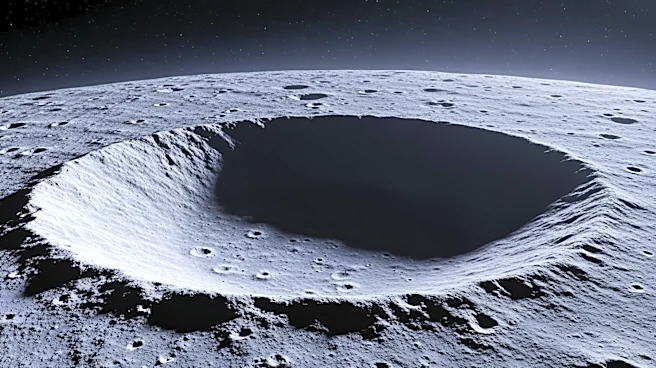
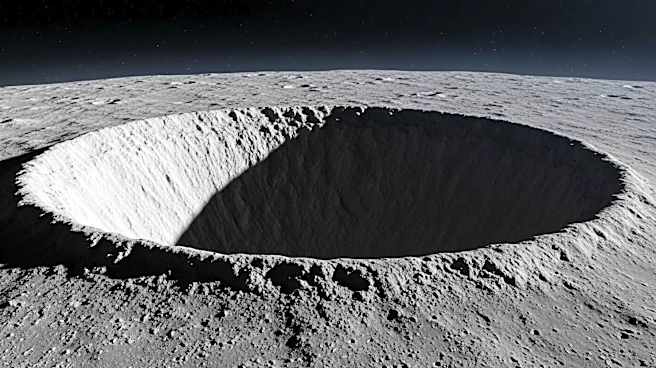
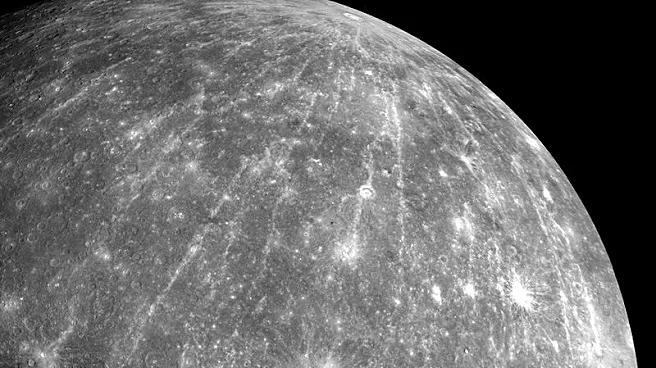
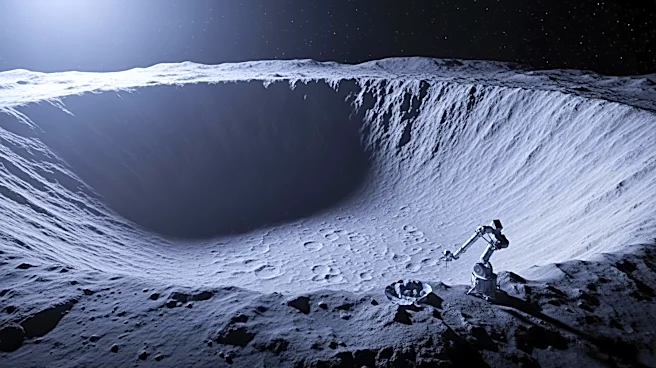
Recent research has unveiled new insights into the South Pole–Aitken (SPA) basin, the moon's largest and oldest confirmed impact crater. This discovery is poised to significantly influence NASA's Artemis mission, scheduled for 2028, which aims to land
near the basin's south pole. The study, published in Science Advances, used advanced 3D simulations to determine that the impactor likely traveled from north to south, creating the basin's unique structure. This refined understanding could guide the Artemis mission to collect samples from the moon's mantle, offering a rare opportunity to study the lunar interior and its formation.
Why It's Important?
The potential to collect mantle samples from the moon's SPA basin represents a major scientific opportunity. Such samples could provide unprecedented insights into the moon's composition and the early history of the solar system. Understanding the moon's mantle could also enhance our knowledge of planetary formation and evolution. The Artemis mission's success in this endeavor could mark a significant milestone in lunar exploration, potentially leading to new discoveries about the moon's geological history and its role in the broader context of space science.
What's Next?
As the Artemis mission prepares for its 2028 launch, NASA will likely focus on refining its landing strategies and ensuring the mission's objectives align with the new findings about the SPA basin. The mission's success could pave the way for future lunar explorations and collaborations with international space agencies. Additionally, the scientific community will be keenly observing the mission's outcomes, which could influence future research directions and funding priorities in planetary science.