





What's Happening?
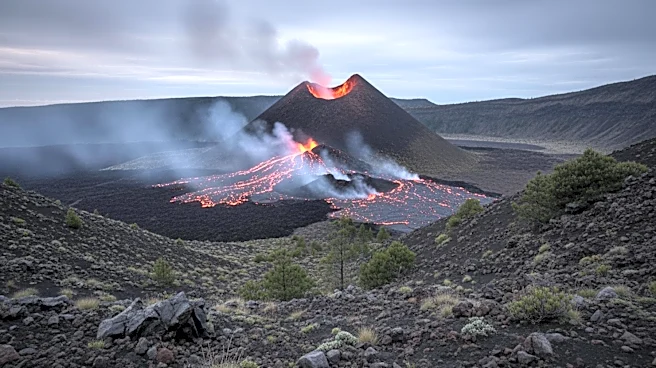
New research published in Science Advances has revealed that the Methana volcano in Greece, located approximately 31 miles from Athens, is not extinct as previously believed. Despite a lack of visible activity for over 100,000 years, the volcano has been
accumulating magma in its subterranean chambers. Scientists analyzed over 1,250 zircon crystals from the Earth's crust beneath the volcano, which allowed them to map its history in detail. The study, led by ETH Zurich volcanologist Olivier Bachmann, found that the volcano's magma chambers have been active almost continuously. This suggests that a lack of surface activity does not necessarily indicate a volcano is extinct. The research also discovered that the magma is exceptionally water-rich, which could influence eruption frequency.
Why It's Important?
The findings have significant implications for global volcanic safety protocols. The study highlights the need to monitor dormant volcanoes, even those without recent eruptions, as they may still pose a threat. This research suggests that current threat levels for long-quiet volcanoes should be re-evaluated. For countries with similar volcanic structures, such as Italy, Indonesia, and Japan, this could mean reassessing the potential risks associated with dormant volcanoes. The study serves as a warning that a long period of dormancy can mask the development of a large, potentially dangerous magma system, which could have serious consequences for nearby populations and infrastructure.
What's Next?
The study's authors recommend that volcano hazard authorities in regions with dormant volcanoes re-evaluate the threat levels of these sites. This could lead to increased monitoring and potentially revised safety protocols to better prepare for possible eruptions. The research underscores the importance of understanding the internal dynamics of volcanoes, which could improve predictive models and risk assessments. As a result, governments and scientific communities may need to invest in more comprehensive monitoring systems to detect signs of magmatic unrest in seemingly inactive volcanoes.