



What's Happening?
The Rafah border crossing between Gaza and Egypt has reopened for limited traffic as part of the ongoing ceasefire between Israel and Hamas. This development marks a significant step in the second phase of the ceasefire agreement, which includes plans
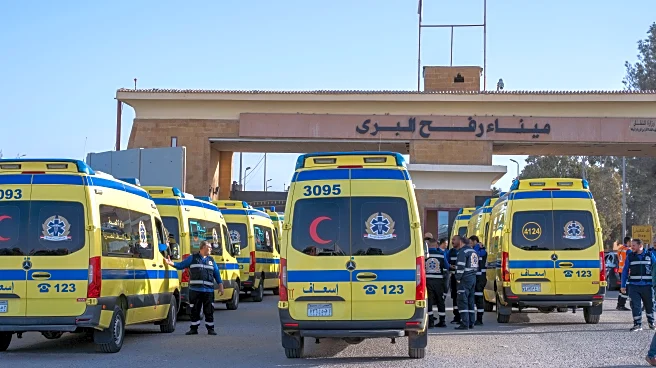
for increased humanitarian aid and rebuilding efforts in Gaza. The crossing, which had been largely closed, will now allow a limited number of people to cross daily, with 50 Palestinians permitted to travel in each direction initially. Humanitarian aid trucks are also lined up to enter Gaza, although the passage of goods remains restricted. The reopening follows the recovery of the last hostage in Gaza, which cleared the way for this move.
Why It's Important?
The reopening of the Rafah crossing is crucial for humanitarian efforts in Gaza, where thousands of Palestinians require medical care and other forms of aid. The crossing serves as a vital link for the movement of people and goods, and its reopening is expected to alleviate some of the humanitarian challenges faced by Gaza's residents. The move is also a key component of the U.S.-brokered ceasefire agreement, which aims to stabilize the region and facilitate rebuilding efforts. The limited reopening, however, highlights ongoing tensions and the need for further negotiations to ensure unrestricted access for aid and people.
What's Next?
The next steps involve monitoring the implementation of the ceasefire agreement's second phase, which includes the establishment of a new Palestinian governance committee in Gaza and the deployment of an international security force. The success of the Rafah crossing's reopening will be evaluated based on its ability to facilitate increased humanitarian aid and the movement of people. Stakeholders, including Israel, Egypt, and international organizations, will continue to play a role in overseeing the crossing's operations and ensuring compliance with the ceasefire terms.