





What's Happening?
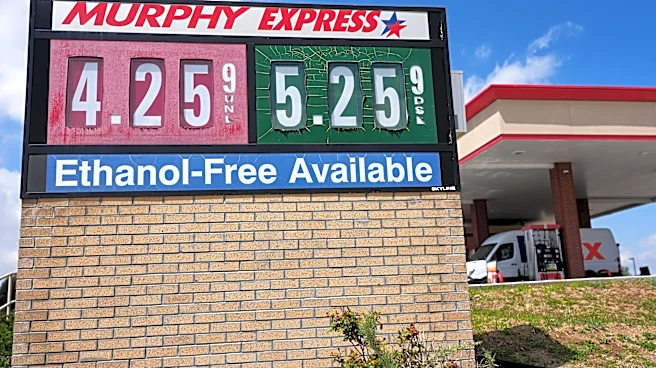
A study by the Federal Reserve of New York reveals that lower-income households are more adversely affected by rising gas prices compared to higher-income groups. During a recent spike in energy prices, households earning less than $40,000 annually increased
their gas spending by only 12%, while higher-income households increased spending by 19%. This disparity highlights a K-shaped economic recovery, where wealthier individuals benefit more from economic gains, while lower-income groups face greater financial strain.
Why It's Important?
The findings underscore the ongoing economic challenges faced by lower-income households, exacerbated by inflation and rising living costs. As gas prices continue to rise, these households may struggle to maintain their standard of living, potentially leading to reduced consumer spending and economic participation. This situation could widen the economic inequality gap, prompting policymakers to consider targeted interventions to support vulnerable populations. The study also highlights the need for sustainable energy solutions to mitigate the impact of volatile fuel prices.