





What's Happening?
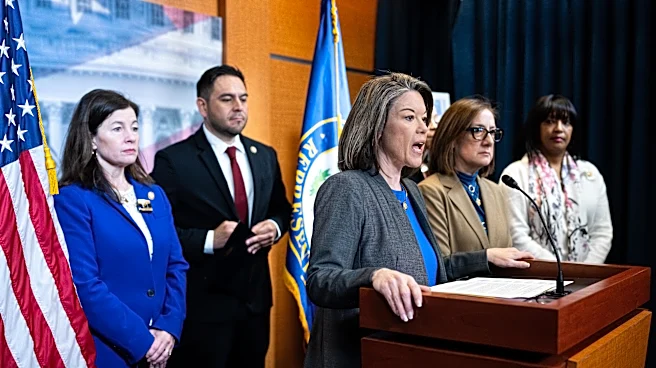
U.S. Senators Katie Britt (R-Ala.), Richard Blumenthal (D-Conn.), and Cory Booker (D-N.J.) have introduced legislation aimed at preventing online platforms from forcing families of harmed children into arbitration. The proposed bill, known as the Ending
Forced Arbitration of Children Online Act, seeks to invalidate pre-dispute arbitration agreements and joint-action waivers for minors who suffer physical injury, mental or psychological harm, privacy violations, or misuse of personal data on covered online platforms. This legislative effort comes in response to concerns raised during a Senate hearing on child safety on platforms like Roblox, where it was highlighted that companies often use arbitration clauses to keep harm cases out of public courts. The bill would apply to platforms frequently used by children, including video games, video streaming services, AI systems, and messaging applications. The Roblox CEO declined to appear at the Senate hearing, but a company spokesperson stated that safety has been central to Roblox since its launch, citing age checks for chat and age-based accounts with protective defaults for users under 16.
Why It's Important?
This legislation is significant because it challenges the current legal framework that often compels families to resolve disputes with tech companies through private arbitration, rather than public litigation. Critics argue that forced arbitration shields companies from public scrutiny and accountability, potentially allowing them to continue practices that harm children. By enabling families to take these cases to court, the bill aims to increase transparency and pressure online platforms to enhance child safety measures. This could lead to substantial changes in how tech companies design their services, manage user data, and respond to allegations of harm, particularly for their younger user base. The bill also highlights a growing bipartisan concern in Congress regarding the safety of children online and the power of tech companies in legal disputes. If passed, it could set a precedent for how online platforms are held accountable for the well-being of their minor users, potentially shifting the balance of power from corporations to consumers and their families.
What's Next?
The proposed Ending Forced Arbitration of Children Online Act will now proceed through the legislative process, requiring committee review and votes in both the Senate and the House of Representatives. Similar legislation, the No Forced Arbitration for Child Sexual Exploitation and Cyber Injuries Act, has also been introduced by Senators John Hawley (R-Mo.) and Dick Durbin (D-Ill.), indicating a broader congressional push on this issue. The bipartisan support for these bills suggests a potential for passage, though tech industry lobbying efforts could influence the outcome. If enacted, online platforms would likely need to revise their terms of service and potentially invest more heavily in child protection features to mitigate legal risks. Families who have experienced harm on these platforms would gain a new avenue for seeking justice, potentially leading to an increase in public lawsuits against tech companies. Additionally, there is a push for Congress to pass the Kids Online Safety Act this year, which aims to provide broader protections for minors online, including on social media platforms.
Beyond the Headlines
The debate over forced arbitration in cases involving minors on online platforms touches upon fundamental questions of corporate responsibility, consumer rights, and the evolving legal landscape in the digital age. The practice of requiring users, including children, to waive their right to public litigation as a condition of service raises ethical concerns about informed consent, especially when minors are involved. Legal experts argue that children cannot fully comprehend or agree to such complex legal terms. This legislative push could signal a broader shift in how the U.S. legal system views the contractual agreements between tech companies and their users, particularly vulnerable populations. It also highlights the tension between the desire for innovation in online services and the imperative to protect children from potential harms. The outcome of this legislative effort could influence future regulations concerning online content moderation, data privacy for minors, and the overall accountability framework for digital platforms.