



What's Happening?
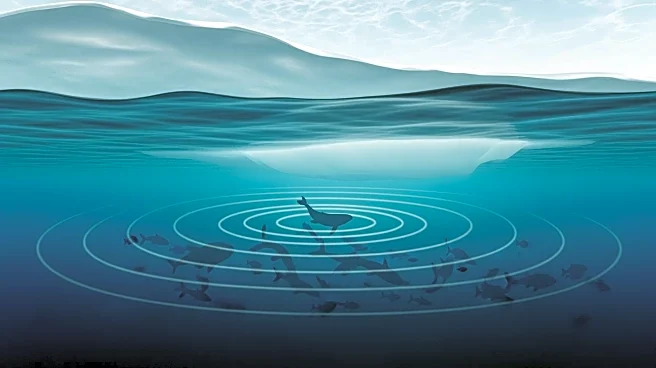
A recent study published in npj Acoustics highlights the increasing underwater noise in the Arctic Ocean due to climate change and human activities. Melting sea ice, expanding shipping routes, and industrial operations are transforming the Arctic's soundscape,
affecting marine life that relies on sound for survival. The study notes that the noise from shipping, icebreakers, and offshore drilling is disrupting the natural acoustic environment, impacting species like bowhead whales and narwhals. These changes also affect Indigenous communities that depend on predictable animal movements for subsistence.
Why It's Important?
The increase in underwater noise in the Arctic has significant ecological and cultural implications. Marine mammals rely on sound for essential behaviors, and increased noise can interfere with communication, navigation, and feeding, potentially leading to long-term ecological shifts. For Indigenous communities, these disruptions threaten traditional hunting and fishing practices, impacting livelihoods and cultural heritage. The study emphasizes the need for targeted management of human activities to mitigate the most disruptive noise during sensitive periods for wildlife.