






What's Happening?
The increasing integration of social media into daily life, particularly among young people, presents a paradox of connection. While platforms offer avenues for global interaction and can strengthen existing relationships, chronic online engagement is linked
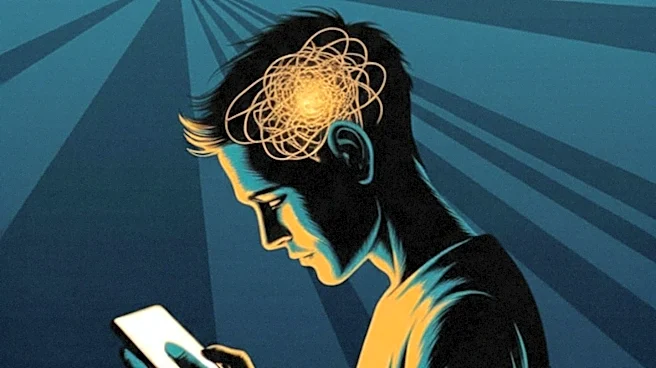
to significant mental health challenges. Adolescents, who are the first generation to grow up with constant social media access, often carry their social worlds in their pockets, leading to a blurring of 'on' and 'off' lines. This constant digital presence can foster anxiety, isolation, and emotional strain. Research indicates that social media often encourages social comparison through curated content, leading young people to feel they are falling behind. The relationship between loneliness and social media is complex; while extensive scrolling is associated with higher loneliness, using social media to chat with friends can reduce it. Psychologists suggest that online presence strengthens sociability when offline relationships are secure, but erodes it when it substitutes for deeper real-world engagement. Individuals with social anxiety may find a net positive through social media, as even superficial connections can be beneficial.
Why It's Important?
The pervasive nature of social media among U.S. youth has profound implications for public health and societal well-being. The disruption of sleep patterns due to late-night scrolling, the shortening of attention spans by short-form content, and the fragmentation of attention by constant notifications are critical concerns for adolescent brain development and cognitive function. The rise of cyberbullying, exacerbated by social media, creates a cycle of loneliness and victimization that can have lasting psychological effects. This issue impacts educational institutions, healthcare systems, and families, as they grapple with supporting young people navigating these digital pressures. The distinction between healthy and unhealthy social media use is crucial for developing effective interventions and educational programs. Understanding how social media influences identity formation and social comparison is vital for fostering resilience and positive self-esteem in a digitally saturated world. The findings highlight the need for a balanced approach that leverages the benefits of digital connectivity while mitigating its potential harms.
What's Next?
Addressing the complex relationship between social media and youth mental health will likely involve multi-faceted approaches from various stakeholders. Educational initiatives could focus on digital literacy, teaching young people how to critically evaluate online content and manage their screen time effectively. Parents and educators may need to implement strategies to encourage balanced online and offline engagement, promoting activities that foster deeper social connections and personal development. Technology companies might face increasing pressure to design platforms that prioritize user well-being, potentially through features that encourage breaks, limit exposure to harmful content, or promote positive interactions. Further research is needed to refine understanding of how different types of social media use impact various aspects of mental health, allowing for more targeted interventions. Policy discussions may also emerge regarding age-appropriate access, data privacy, and the responsibilities of social media platforms in protecting young users.
Beyond the Headlines
The discussion around social media and youth mental health extends beyond immediate psychological impacts to touch upon broader societal shifts. The normalization of constant digital connectivity is reshaping social norms and expectations, potentially altering the very fabric of human interaction. The emphasis on curated online personas raises questions about authenticity and the pressure to conform to idealized images, which can have long-term effects on self-perception and mental resilience. Ethically, the responsibility of social media companies in safeguarding the mental health of their youngest users is a growing concern, prompting debates about regulation and corporate accountability. Culturally, the digital native generation is developing unique communication styles and social behaviors, which could lead to a redefinition of community and belonging. The challenge lies in harnessing the positive aspects of digital connection while fostering critical thinking and emotional intelligence to navigate the inherent complexities of an increasingly online world.