



What's Happening?
A Palestinian family, led by Amani Imran, recently returned to Gaza after a prolonged stay in Egypt due to medical treatment for her husband, Adel Imran. The family was among many Palestinians waiting to cross the Rafah border, which had been closed following
a Hamas-led attack on Israel in 2023. Despite a U.S.-brokered ceasefire that stipulated the reopening of the crossing, Israel only allowed limited traffic after retrieving the remains of hostages. The Imran family faced numerous challenges during their return, including confiscation of personal items and lengthy interrogations at multiple checkpoints. The journey, which should have been brief, was extended due to various delays and inspections, highlighting the ongoing difficulties faced by Palestinians trying to return to Gaza.
Why It's Important?
The reopening of the Rafah border crossing is a significant development for Palestinians seeking to return to Gaza, as it represents a rare opportunity for movement in and out of the enclave. However, the limited and controlled nature of the crossing underscores the ongoing humanitarian challenges in the region. The restrictions and inspections faced by returnees highlight the broader geopolitical tensions between Israel and Hamas, and the impact of these tensions on ordinary Palestinians. The situation also reflects the fragile nature of the ceasefire and the complex dynamics of international diplomacy in the region. For the U.S., which brokered the ceasefire, the situation presents both a diplomatic challenge and an opportunity to influence peace efforts in the Middle East.
What's Next?
The future of the Rafah crossing remains uncertain, as its operation is contingent on the political and security situation between Israel and Hamas. Continued monitoring by international bodies, such as the European Union Border Assistance Mission, will be crucial in ensuring that the crossing remains open and that humanitarian needs are met. The international community, including the U.S., may need to engage in further diplomatic efforts to maintain the ceasefire and address the underlying issues that led to the closure of the crossing. Additionally, the humanitarian situation in Gaza, exacerbated by limited access to medical care and essential supplies, will require ongoing attention and support from global aid organizations.
Beyond the Headlines
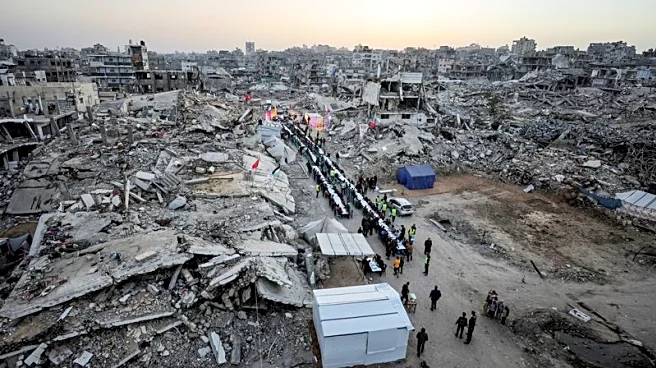
The experience of the Imran family and others returning to Gaza highlights the broader issue of mobility and access for Palestinians living in the enclave. The confiscation of personal items and the restrictions on what can be brought into Gaza reflect the broader economic and social constraints faced by residents. These challenges are compounded by the ongoing blockade and the destruction caused by previous conflicts, which have left Gaza's infrastructure in a fragile state. The situation raises important questions about the rights of displaced persons and the responsibilities of occupying powers under international law. It also underscores the need for a sustainable and just resolution to the Israeli-Palestinian conflict.