


What's Happening?
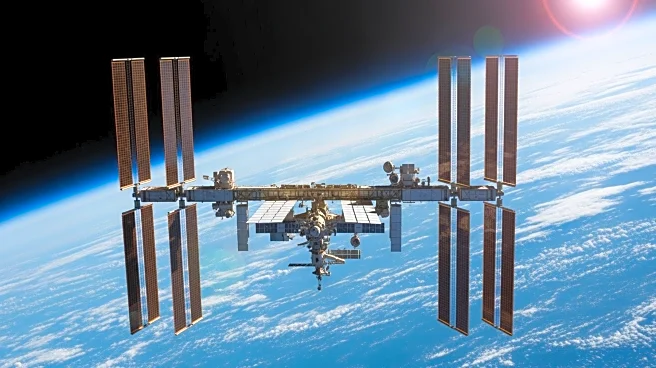
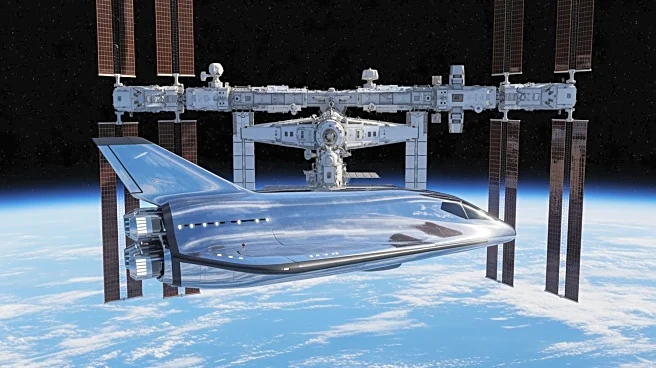
On February 14, 2026, the International Space Station (ISS) welcomed four new astronauts, restoring its crew to full capacity following a health emergency that necessitated an evacuation earlier in the year. The new crew members include NASA's Jessica
Meir and Jack Hathaway, France's Sophie Adenot, and Russia's Andrei Fedyaev. This crew change was prompted by a critical medical evacuation in January 2026, marking NASA's first such evacuation in 65 years of human spaceflight. The evacuation was due to a serious health issue experienced by an astronaut, which required immediate attention and led to the temporary reduction of the ISS crew to just three members. The incident highlighted the unpredictable nature of space missions and the importance of having contingency plans in place.
Why It's Important?
The arrival of the new astronauts is significant for several reasons. It underscores the importance of international collaboration in space exploration, as the ISS is a joint effort involving multiple countries. The diverse expertise of the new crew members ensures that the ISS can continue its critical scientific research and operations. The incident also serves as a reminder of the vulnerabilities associated with long-term space missions, emphasizing the need for robust emergency protocols. The ability to quickly replace crew members in the event of a medical crisis is crucial for maintaining the operational integrity of the ISS and ensuring the safety of its inhabitants.
What's Next?
With the new crew in place, the ISS is expected to resume its full range of scientific activities, including spacewalks and research projects that were postponed due to the crew shortage. The incident has prompted NASA and its international partners to review and potentially enhance their emergency response strategies to better handle unforeseen medical crises in the future. The new team will focus on a variety of research areas, contributing to advancements in fields such as biology, physics, and engineering. Their work will continue to push the boundaries of scientific knowledge and support the long-term goals of space exploration.