








What's Happening?
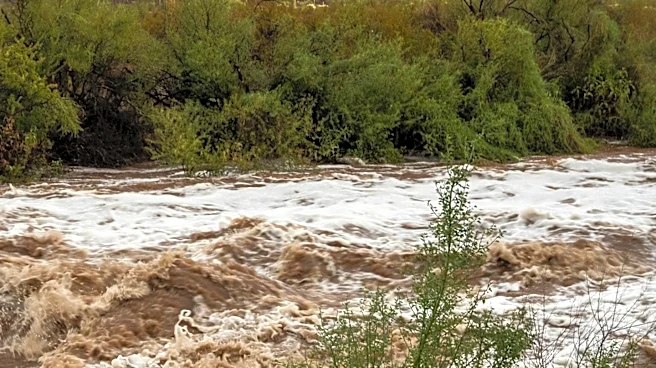
Policymakers and water managers are actively exploring various proposals to stabilize the Colorado River system as water levels at Lake Mead and Lake Powell remain critically low. The reservoirs, which are vital for irrigation and water supply to millions
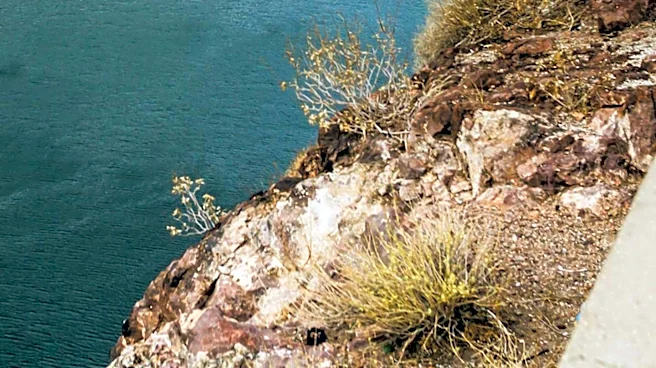
in the West, are under pressure due to prolonged drought conditions. As of recent data, Lake Mead is only 27% full, and Lake Powell is at 23% capacity. This situation has raised concerns about hydropower generation capabilities at Glen Canyon Dam and Hoover Dam. In response, Arizona, California, and Nevada have proposed a plan to conserve up to 1 million acre-feet of water through 2028. Additionally, strategies such as shifting agricultural practices, cloud seeding, and water recycling are being considered to address the water shortage.
Why It's Important?
The ongoing water crisis in the Colorado River Basin has significant implications for agriculture, energy production, and urban water supply in the Western United States. The proposed conservation measures and changes in agricultural practices could help mitigate the water shortage, but they also pose challenges. For instance, reducing water use in agriculture, which accounts for a large portion of water consumption, could impact food production and rural economies. The potential reduction in hydropower generation could also affect energy supply and prices. These developments underscore the need for sustainable water management practices to ensure long-term water security in the region.
What's Next?
Future steps include the implementation of proposed water conservation plans and continued exploration of alternative solutions such as desalination and water recycling. Policymakers will need to balance the interests of various stakeholders, including farmers, urban water users, and environmental groups, to develop effective strategies. The success of these efforts will depend on collaboration among states and the federal government, as well as the willingness of stakeholders to adapt to new water management practices.