






What's Happening?
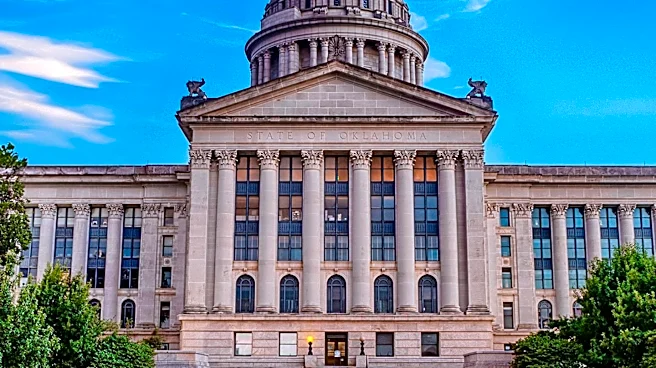
Oklahoma is commemorating its 119th anniversary of statehood, a milestone reached on November 16, 1907, when President Theodore Roosevelt signed the statehood proclamation. This act officially merged the Oklahoma and Indian territories, establishing Oklahoma as
the 46th state in the nation. Prior to this, there was a significant movement to create a separate state from Indian Territory, known as the proposed State of Sequoyah. In August 1905, representatives from the Five Civilized Tribes and other Native American groups convened in Muskogee to draft a constitution and petition Congress for statehood for Sequoyah, which would have encompassed the eastern half of present-day Oklahoma. Despite voter approval of the proposed constitution, Congress did not sanction the plan due to political opposition and disagreements regarding the admission of territories into the Union. The eventual path to statehood involved the Oklahoma Enabling Act, signed by President Theodore Roosevelt on June 16, 1906, which initiated the process of combining the two territories. Voters in both territories approved this joint statehood proposal on September 17, 1907.
Why It's Important?
The historical journey to Oklahoma's statehood highlights the complex interplay of federal policy, Native American sovereignty, and territorial expansion in the early 20th century. The initial push for the State of Sequoyah underscores the efforts by Native American tribes to maintain governmental autonomy amidst increasing federal pressure. The eventual consolidation into a single state, rather than two, significantly shaped the demographic, political, and economic landscape of the region. This decision had lasting implications for land ownership, resource management, and the integration of diverse populations within a unified state structure. The statehood process also reflects broader U.S. policies concerning indigenous populations and the mechanisms through which new states were incorporated into the Union, influencing subsequent state formations and federal-tribal relations. The celebration serves as a reminder of the foundational events that defined Oklahoma's identity and its place within the United States.
What's Next?
The annual observance of Statehood Day in Oklahoma will continue to serve as a moment for reflection on the state's origins and its historical development. Educational institutions and historical societies, such as the Oklahoma Historical Society, will likely continue to play a crucial role in preserving and disseminating information about this period. Future commemorations may explore the evolving understanding of the state's founding, particularly concerning the perspectives of Native American tribes and their historical aspirations for self-governance. Discussions around the legacy of the State of Sequoyah proposal and the impact of the Oklahoma Enabling Act on tribal sovereignty are likely to remain relevant in academic and cultural discourse. The ongoing recognition of Statehood Day reinforces Oklahoma's unique historical narrative within the broader context of U.S. history.
Beyond the Headlines
The narrative of Oklahoma's statehood extends beyond a simple administrative act, touching upon profound ethical and cultural dimensions. The 'mock wedding' between 'Mr. Oklahoma' and 'Miss Indian Territory' during the 1907 celebrations, while intended to symbolize unity, also reflects the prevailing cultural attitudes and the often-unequal power dynamics between the incoming settlers and the established Native American communities. This symbolic act, though seemingly innocuous, can be viewed through a contemporary lens as a representation of the forced assimilation and the diminishing of Native American self-determination that characterized the era. The unapproved State of Sequoyah proposal represents a significant 'what if' in U.S. history, highlighting a missed opportunity for a different model of state formation that could have better preserved indigenous governance structures. Understanding these deeper implications is crucial for a comprehensive appreciation of Oklahoma's complex heritage and the ongoing efforts to reconcile historical injustices.