



What's Happening?
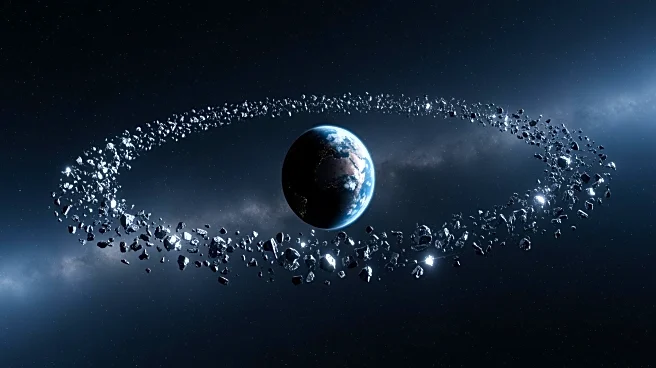
Scientists have raised concerns about the increasing clutter of satellites and space debris in Earth's low orbit, which could lead to a catastrophic collapse. This scenario, known as Kessler syndrome, involves a chain reaction of collisions that generate
more debris, potentially trapping humanity on Earth and hindering space exploration for decades. The study, which builds on NASA scientist Donald Kessler's theoretical model, suggests that a solar storm could trigger such a collapse by disrupting satellite navigation systems. With companies like SpaceX and Amazon launching thousands of satellites, the risk of collision is growing, prompting researchers to develop a 'CRASH clock' to estimate the time until a potential disaster.
Why It's Important?
The potential collapse of Earth's lower orbit poses significant risks to global communications, navigation, and space exploration. A cascade of debris could damage or destroy satellites, leading to widespread disruptions in services that rely on satellite technology. This scenario underscores the need for international cooperation in managing space traffic and developing strategies to mitigate the risks of space debris. The study highlights the urgency of addressing these challenges as the number of satellites in orbit continues to rise, driven by commercial and governmental interests.
What's Next?
Efforts to prevent a catastrophic collapse of Earth's lower orbit will likely focus on improving space traffic management and debris mitigation strategies. This could involve developing technologies to remove debris, enhancing satellite collision avoidance systems, and establishing international regulations for satellite launches. The scientific community and space agencies may also prioritize research into the effects of solar storms on satellite operations to better prepare for potential disruptions. Collaboration between nations and private companies will be crucial in addressing these challenges and ensuring the sustainable use of space.