
What's Happening?
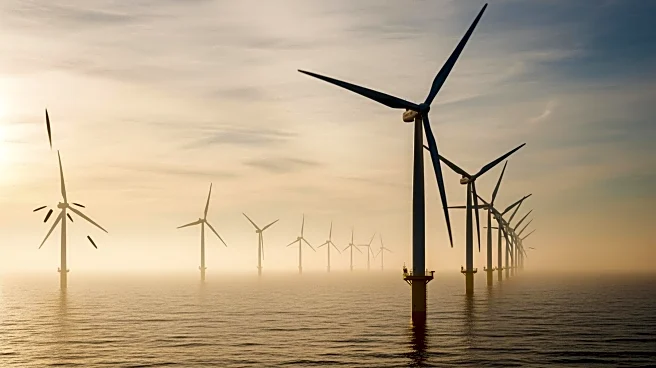
The UK government has awarded contracts for a record amount of offshore wind projects as part of its strategy to increase the country's clean electricity supply. These projects, which span across England,
Scotland, and Wales, include what could become the world's largest offshore wind farm in the North Sea. Despite the record achievement, analysts warn that the government may struggle to meet its 2030 clean power target due to rising costs in the offshore wind sector. The government aims for at least 95% of Great Britain's electricity to come from clean sources by 2030, with offshore wind playing a crucial role. The latest auction secured 8.4 GW of offshore wind capacity, which is essential for meeting the target. However, the rising costs of offshore wind, driven by global supply chain pressures and increased steel costs, pose challenges.
Why It's Important?
The expansion of offshore wind capacity is a significant step towards reducing carbon emissions and tackling climate change. By increasing the share of clean energy, the UK aims to decrease its reliance on fossil fuels, which are subject to volatile prices. The move is expected to lower electricity bills in the long term by displacing expensive gas power stations. However, the rising costs of offshore wind projects could lead to higher initial electricity prices, affecting consumers. The government's commitment to clean energy is crucial for meeting climate targets and ensuring energy security, but it must balance these goals with the economic implications of rising project costs.
What's Next?
The UK government will need to focus on connecting the newly secured offshore wind capacity to the national grid to ensure it contributes to the electricity supply by 2030. This involves significant infrastructure upgrades, which could further impact electricity prices. The government may also need to address the concerns of stakeholders, including political parties and environmental groups, regarding the cost and environmental impact of these projects. Continued investment in renewable energy and technological advancements will be essential to overcoming these challenges and achieving the clean power target.
Beyond the Headlines
The development of offshore wind projects has broader implications for the UK's energy policy and economic landscape. It supports the growth of green jobs and the renewable energy sector, contributing to economic diversification. However, the environmental impact on marine life and coastal communities must be carefully managed. The success of these projects could serve as a model for other countries aiming to transition to clean energy, highlighting the importance of balancing environmental goals with economic realities.