
What's Happening?
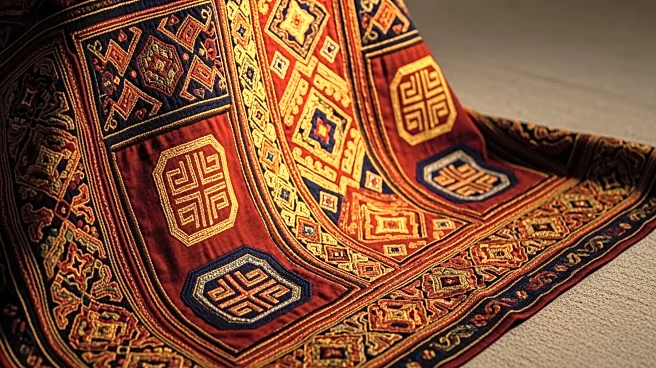
Researchers have developed a lightweight visual recognition framework using AI to enhance the recognition of Tibetan Opera costumes. This framework employs advanced computer vision techniques, such as
object detection and image classification, to digitize and preserve intangible cultural heritage. The study utilized the YOLOv9t model, which demonstrated high accuracy in recognizing complex costume patterns. The research aims to facilitate the preservation and dissemination of cultural heritage by improving the recognition of small or occluded targets while maintaining computational efficiency.
Why It's Important?
The integration of AI in cultural preservation offers a new avenue for safeguarding intangible cultural heritage, which is often at risk of being lost. By improving the accuracy and efficiency of recognizing cultural artifacts, this technology can aid in documenting and archiving cultural elements that are crucial for historical and educational purposes. For the U.S., this approach could be applied to preserve diverse cultural heritages, supporting efforts to maintain cultural diversity and heritage tourism. Additionally, it highlights the potential of AI in enhancing the accessibility and understanding of cultural artifacts globally.
What's Next?
Future developments may focus on expanding the dataset to include a wider variety of cultural artifacts and improving the model's adaptability to different cultural contexts. Collaborations with cultural institutions and museums could facilitate the integration of this technology into existing preservation efforts. There may also be discussions on ethical considerations and the need for policies to ensure the respectful use of AI in cultural heritage preservation. Stakeholders will likely explore ways to balance technological advancement with cultural sensitivity.