



What's Happening?
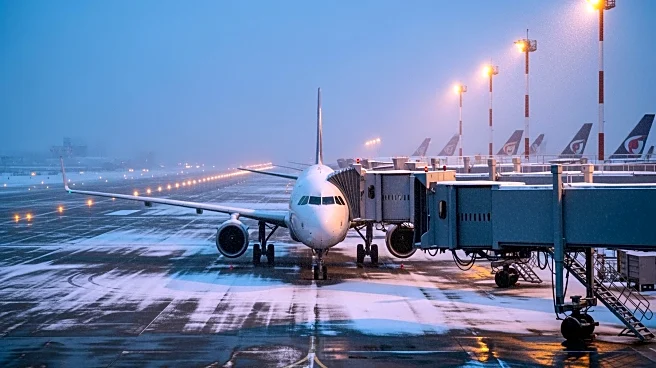
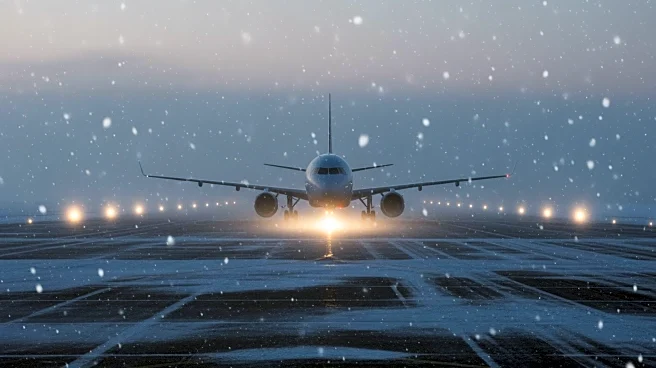
Delta Air Lines, along with other major carriers, has canceled numerous flights due to the impending Winter Storm Hernando, which is expected to bring blizzard conditions to the Northeast and Mid-Atlantic regions. The storm is anticipated to cause significant
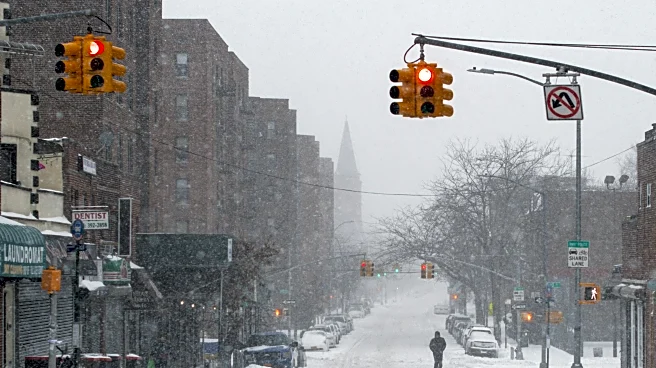
travel disruptions, with up to 18 inches of snow forecasted in some areas. In response, Delta and other airlines, including American Airlines, JetBlue, Southwest, and United, have waived change fees and fare differences for flights scheduled on February 22 and 23. This measure is intended to provide flexibility for travelers affected by the storm. The governors of New Jersey and New York have declared states of emergency, urging residents to avoid travel due to hazardous conditions. Amtrak has also adjusted its service on the East Coast in anticipation of the storm's impact.
Why It's Important?
The cancellation of flights and the declaration of states of emergency highlight the severe impact of Winter Storm Hernando on transportation and public safety. The storm's potential to disrupt travel across a significant portion of the East Coast could have economic implications, affecting businesses reliant on air travel and logistics. The decision by airlines to waive fees reflects an effort to mitigate customer dissatisfaction and maintain safety. The storm also underscores the vulnerability of infrastructure to extreme weather events, prompting discussions on preparedness and response strategies. The broader impact on the economy and daily life in affected regions could be substantial, with potential delays in goods and services.
What's Next?
As the storm progresses, airlines and transportation services will continue to monitor conditions and adjust operations accordingly. Travelers are advised to stay informed about flight statuses and road conditions. The response from local governments and emergency services will be crucial in managing the storm's impact and ensuring public safety. The aftermath of the storm may lead to evaluations of current emergency response protocols and infrastructure resilience, potentially influencing future policy decisions.