



What's Happening?
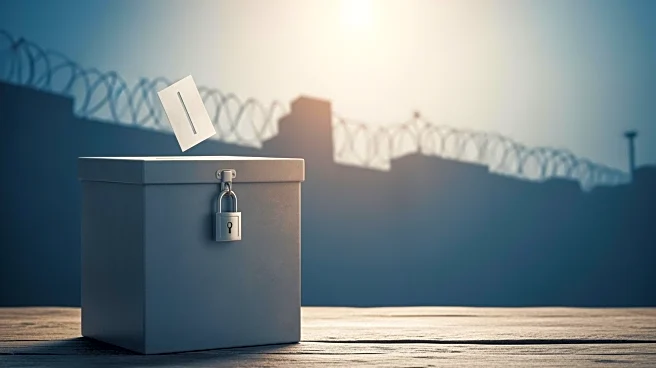
Ukrainian President Volodymyr Zelensky has announced that Ukraine could potentially hold elections within the next 60 to 90 days, contingent upon security guarantees. This statement comes as a response to pressure from U.S. President Trump, who has accused
Zelensky of using the ongoing conflict with Russia to avoid elections. Zelensky has expressed readiness for elections but emphasized the need for security, especially given the current missile attacks and the presence of nearly 1 million Ukrainians serving in the military. The logistical challenges are significant, with over 5.9 million refugees abroad and 4.4 million internally displaced, complicating voter registration and election infrastructure. Currently, only 75% of polling stations are operational, and the country remains under martial law, which prohibits elections.
Why It's Important?
The potential for elections in Ukraine during an ongoing conflict has significant implications for the country's political legitimacy and stability. Holding elections could bolster Ukraine's democratic credentials and counter Russian propaganda that questions Zelensky's mandate. However, the logistical and security challenges are immense, and rushing the process could lead to elections that do not meet international standards, potentially undermining their legitimacy. The situation also places pressure on the U.S. and European allies to provide security guarantees, which could influence broader geopolitical dynamics and the peace negotiation process with Russia.
What's Next?
If Ukraine proceeds with elections, it will require substantial international support to ensure security and logistical feasibility. The U.S. and European countries may need to engage more deeply in providing security assurances and facilitating the electoral process. Additionally, any move towards elections could impact ongoing peace negotiations, as it may require a temporary ceasefire or other security arrangements. The international community will be closely watching how these developments unfold, as they could set precedents for conducting elections in conflict zones.