





What's Happening?
At the UnidosUS conference in Austin, discussions centered around the growing influence of Latino voters in Texas, a key demographic in upcoming elections. Democratic nominee for U.S. Senate, James Talarico, emphasized the importance of Latino support,
referencing Beto O’Rourke's 2018 campaign where he secured 64% of the Latino vote. Despite this, Democrats face challenges in regaining Hispanic support, particularly in South Texas where Republicans have made significant gains. Attendees expressed concerns over cost of living, jobs, and immigration enforcement, indicating a complex political landscape where Latino voters are weighing their options between parties.
Why It's Important?
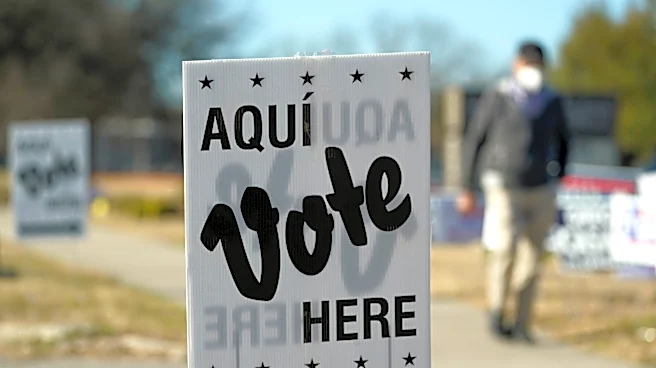
The Latino vote is crucial in Texas, a state with a rapidly growing Hispanic population. The outcome of elections could hinge on this demographic, influencing not only state politics but also national trends. Democrats aim to regain lost ground among Hispanic voters, while Republicans seek to maintain and expand their recent gains. The political engagement of Latino voters could reshape party strategies and policy priorities, particularly on issues like immigration and economic stability. The ability of either party to effectively address these concerns could determine their success in future elections.
What's Next?
As the 2026 elections approach, both parties are likely to intensify their outreach efforts to Latino communities. Democrats may focus on addressing economic and immigration concerns to win back support, while Republicans might emphasize their recent successes in South Texas. The evolving political preferences of Latino voters will be closely monitored, with potential shifts impacting not only the Texas Senate race but also broader electoral dynamics. Continued dialogue and engagement at events like the UnidosUS conference will be critical in shaping voter sentiment and party strategies.