







What's Happening?
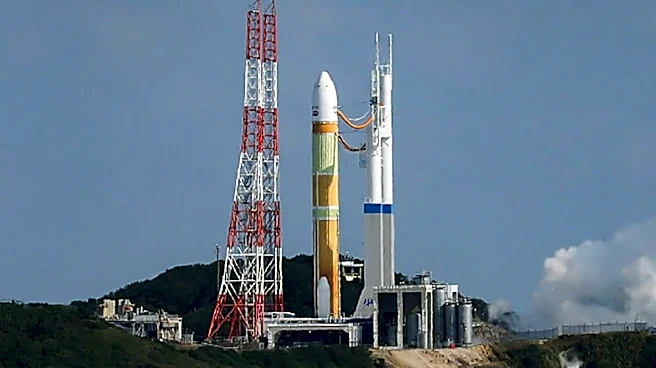
The Japanese government has announced an ambitious plan to significantly increase its space launch activities, aiming for 30 launches per year by the early 2030s. This target includes both government and commercial launches. Currently, Japan conducts
about 50% of its satellite launches domestically, but the government intends to raise this to 60-70%. The announcement was made during the Spacetide conference in Tokyo, where officials discussed the challenges and strategies to achieve this goal. Despite recent setbacks, such as the failure of the Kairos launch vehicle to reach orbit, companies like Space One are committed to continuing their efforts. The government is also considering regulatory reforms to facilitate more frequent launches and is exploring partnerships with international players to utilize Japanese launch facilities.
Why It's Important?
This initiative is significant as it reflects Japan's commitment to strengthening its position in the global space industry. Increasing the number of domestic launches could enhance Japan's technological capabilities and economic growth. It also aligns with global trends where countries are investing in space technology for strategic and commercial benefits. The plan could lead to increased investment in the Japanese space sector, fostering innovation and creating jobs. Additionally, by hosting international launches, Japan could become a key player in the global space launch market, potentially attracting foreign investment and collaboration.
What's Next?
To achieve the target of 30 launches annually, Japan will need to address several challenges, including improving the reliability of its launch vehicles and enhancing its launch infrastructure. The government plans to streamline regulatory processes to support this growth. Companies like Space One are expected to continue developing their launch capabilities, while the government may act as an anchor tenant to ensure a steady demand for launches. International collaborations, such as the agreement with Firefly Aerospace to use Japanese facilities, could also play a crucial role in reaching the launch target.