








What's Happening?
NASA has announced an accelerated strategy for its Artemis program, aiming for an Artemis III test flight in 2027 and a crewed lunar landing with Artemis IV in 2028. This revised timeline, detailed in a November 4 update, emphasizes the critical role
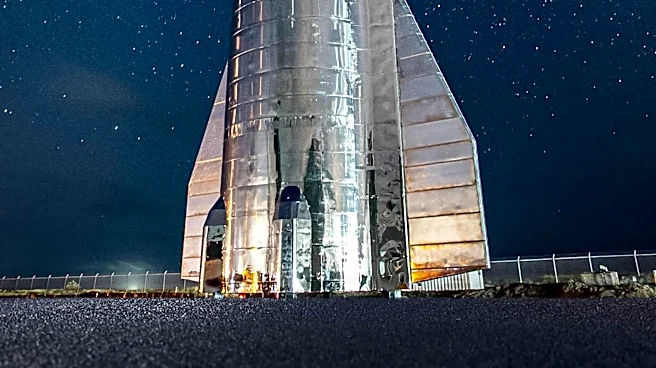
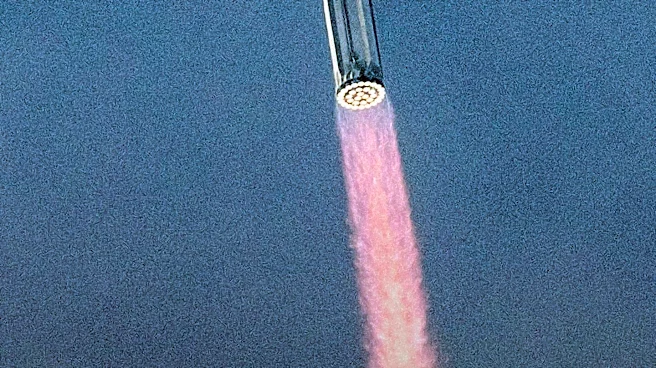
of integration among separately built vehicles, flight software, ground teams, and equipment. The Artemis III mission is planned as a 14-day Earth-orbit mission involving four astronauts, serving as an integration test for rendezvous, docking, habitation, and operational procedures before a lunar landing attempt. The agency is pursuing lunar landers from both SpaceX and Blue Origin, with their differing approaches to lunar transport. The commercial aerospace industry is closely watching how this ambitious exploration transitions into a repeatable service, requiring hardware to move from development to dependable production and individual demonstrations to become scheduled operations.
Why It's Important?
The acceleration of the Artemis program holds significant implications for the U.S. aerospace industry and its economic stakeholders. The push for a repeatable lunar service could unlock substantial commercial opportunities, but its success hinges on efficient execution and integration. The use of multiple suppliers like SpaceX and Blue Origin for lunar landers introduces flexibility and competition, potentially mitigating risks associated with a single development path. However, maintaining these alternatives also incurs costs, requiring careful evaluation of their value against potential disruptions. For companies like Lockheed Martin, a prime contractor for the Orion spacecraft, the program represents continued involvement in crew transport hardware, though its impact on the company's overall share price is one part of a broader investment case. The program's ability to foster a durable business model for space exploration will depend on turning complex operations into repeatable, fundable services.
What's Next?
Future progress of the Artemis program will be assessed through specific milestones. These include the completion of integrated tests and the resolution of any identified problems, demonstrated performance supporting hardware readiness, and the securing of funded orders and consistent deliveries to support repeat production. These steps are crucial for establishing both technical progress and commercial credibility. The program's long-term economic contribution will depend on its ability to transform difficult operations into repeatable ones, extending beyond a single successful landing to a system that can reliably support subsequent missions. The ongoing development and testing of various components, including the Orion spacecraft and the different lunar lander designs, will be key indicators of the program's trajectory towards its ambitious goals.
Beyond the Headlines
The Artemis program's accelerated timeline and emphasis on commercial partnerships highlight a broader shift in space exploration, moving towards a model where government agencies collaborate more extensively with private industry. This approach aims to leverage commercial innovation and efficiency, but it also introduces complexities in managing diverse technologies and ensuring seamless integration. The program's success could establish new paradigms for space infrastructure, where components and processes are standardized and reusable across multiple missions, thereby spreading development costs and fostering a more sustainable lunar economy. The ethical and legal frameworks for lunar activities, including resource utilization and international cooperation, will also evolve as the program progresses, shaping the future of human presence beyond Earth.