
What's Happening?
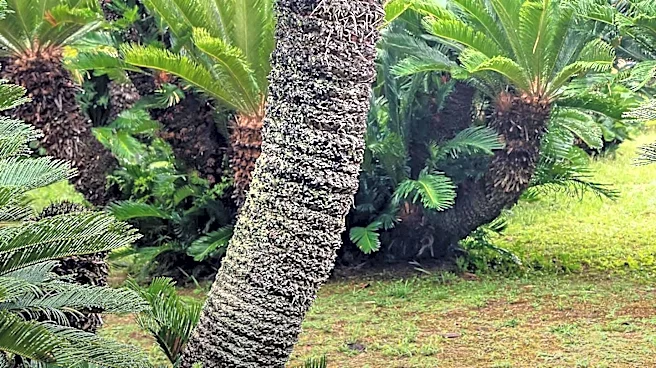
The ASPCA has issued warnings regarding the severe toxicity of sago palm plants to pets, particularly dogs, cats, and horses. Every part of the sago palm contains toxins, but the seeds are highlighted
as the most dangerous due to their high concentration of cycasin, a compound that attacks the liver. The seeds are bright orange, walnut-sized, and easily accessible to pets once they drop from the female plant. The ASPCA notes that as few as one or two seeds can be fatal, especially for smaller dogs. Symptoms of sago palm poisoning can range from vomiting, diarrhea, and drooling to jaundice, liver failure, and death. Pet owners are advised to take immediate action if ingestion is suspected, contacting a veterinarian or the ASPCA Animal Poison Control Center without waiting for symptoms to appear, as early treatment significantly improves outcomes.
Why It's Important?
This warning from the ASPCA is crucial for pet owners across the U.S., especially in warmer climates where sago palms are common landscape plants. The widespread presence of these plants in residential areas poses a significant, often unrecognized, threat to household pets. The ease with which pets, particularly dogs, can ingest the highly toxic seeds makes this a critical public health concern for animal welfare. Awareness of this danger can prevent tragic outcomes and save pet lives, reducing emotional distress and financial burdens on pet owners. Furthermore, it underscores the importance of pet owners being vigilant about the plants in their environment and understanding potential hazards to their animals.
What's Next?
Pet owners with sago palms are urged to implement preventative measures immediately. This includes regularly checking for and removing fallen seeds, especially during the fall when female plants drop their ripened orange seeds. Wearing gloves during seed collection is recommended as the seeds are also toxic to humans. For those with pets, removing the female cone before seeds ripen or even replacing the sago palm with a non-toxic alternative is suggested as the safest course of action. Veterinarians and animal poison control centers will continue to be vital resources for emergency treatment and guidance. Increased public awareness campaigns from organizations like the ASPCA could further educate pet owners on this specific plant toxicity and general pet safety regarding household and garden plants.
Beyond the Headlines
The issue of sago palm toxicity extends beyond immediate pet safety to broader implications for landscaping choices and public awareness regarding common ornamental plants. Many homeowners may be unaware of the inherent dangers of plants commonly used in their yards, highlighting a gap in consumer information provided by nurseries or landscapers. This situation points to a need for greater responsibility in labeling potentially toxic plants and for educational initiatives that inform the public about pet-safe gardening. It also touches upon the ethical considerations of plant selection in shared community spaces and the potential for regulatory bodies to encourage or mandate better disclosure of plant toxicity, fostering a safer environment for pets and families alike.