





What's Happening?
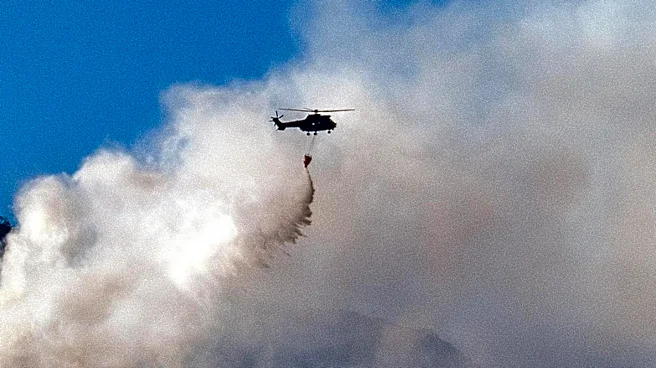
One person died and two foreign nationals were rescued after a helicopter crashed into a river in Indonesia during a mission to combat wildfires in South Kalimantan. The deceased crew member was identified by Indonesian authorities as Yayan Supyansuri.
The two rescued individuals, Michael John Betterridge (an Australian national) and Hugh Andrew John Page (a New Zealander), were found safe and transported to a hospital for treatment. The helicopter, a Super Puma H-225, was owned by a company contracted by disaster authorities for firefighting operations. Investigations into the accident are ongoing, with the military having retrieved the helicopter's black box. This incident follows another helicopter crash in central Kalimantan that killed three crew members during a similar operation.
Why It's Important?
This tragic incident underscores the significant risks faced by those involved in combating the severe wildfires in Indonesia, which have been exacerbated by a strong El Niño and have led to widespread toxic haze across Southeast Asia. The involvement of foreign nationals highlights the international cooperation required to address these environmental disasters. The ongoing investigations into the crash are crucial for identifying causes and implementing safety improvements to protect personnel engaged in these hazardous operations. The loss of life and equipment impacts the effectiveness of firefighting efforts, which are already strained by the scale and intensity of the blazes, affecting public health and environmental stability in the region.
What's Next?
Investigations into the helicopter crash are continuing, with the black box expected to provide critical information regarding the cause of the accident. This information will be vital for implementing new safety protocols and improving operational procedures for aerial firefighting missions in Indonesia. Despite the setback, disaster authorities have indicated that firefighting operations will continue. The persistent dry season and the effects of El Niño suggest that the wildfire threat will remain high, necessitating sustained and potentially enhanced international assistance. Efforts will likely focus on improving coordination, equipment, and training to mitigate future risks for those on the front lines of these environmental crises.
Beyond the Headlines
The recurring wildfires in Indonesia and the resulting haze have profound long-term implications beyond immediate casualties and environmental damage. The toxic smog significantly impacts public health, leading to a surge in respiratory illnesses in affected areas and neighboring countries like Malaysia and Singapore. This environmental crisis also has economic consequences, disrupting air travel, tourism, and agricultural activities. The incident highlights the broader challenges of climate change and its role in intensifying natural disasters, demanding more robust and coordinated international responses. It also raises questions about the sustainability of current land management practices and the need for more effective prevention strategies to address the root causes of these annual blazes.