






What's Happening?
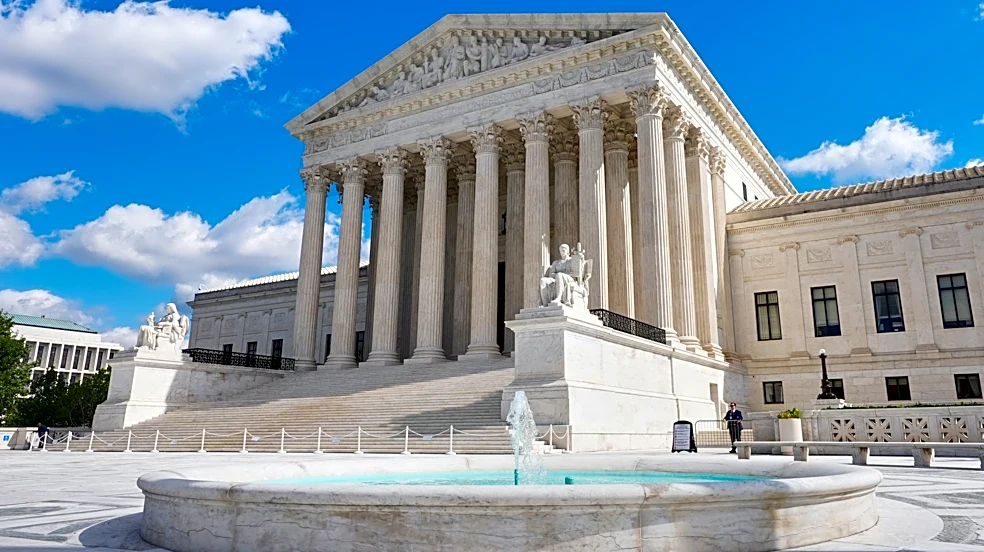
Four U.S. Supreme Court justices—Sonia Sotomayor, Neil Gorsuch, Amy Coney Barrett, and Ketanji Brown Jackson—recused themselves from a music copyright case, resulting in the court being unable to hear the matter due to a lack of quorum. While the court did
not provide specific reasons for the recusals, the watchdog group Fix the Court suggests that all four justices have book deals with Penguin Random House, a subsidiary of a German conglomerate that is a party in the copyright case. Federal law and the Supreme Court's code of conduct require justices to recuse themselves when they have a financial stake in a party or if their finances could be impacted by a case's outcome. Legal ethics experts, such as Renee Knake Jefferson of the University of Houston, acknowledge that while justices are following recusal rules, the inability of the Supreme Court to decide a case due to multiple recusals creates an institutional problem, as there are no substitute justices.
Why It's Important?
This incident highlights a significant ethical and institutional challenge for the Supreme Court. While individual justices adhering to recusal rules is positive, the collective impact of multiple recusals can paralyze the court's ability to fulfill its constitutional duties, especially in cases where a quorum is required. The issue of book deals and potential conflicts of interest for Supreme Court justices has been a recurring concern, as these financial arrangements can create perceived or actual biases. Law professor Josh Blackman argues that justices should prioritize their judicial duties over external activities like writing books. The lack of a clear, external enforcement mechanism for the Supreme Court's code of conduct, which largely relies on self-policing, further complicates the matter. This situation underscores the need for a robust and transparent policy to manage potential conflicts arising from justices' outside financial activities, particularly those involving entities that frequently appear before the court.
What's Next?
The Supreme Court has not commented on the specific proposal to place book advances and royalties into separate accounts inaccessible until retirement, a suggestion aimed at mitigating conflicts of interest. Law professor Josh Blackman advocates for Congress to pass legislation to address the issue of book royalties and judicial recusals, suggesting that legislative action may be necessary to provide a more definitive framework. The current situation, where the Supreme Court's code of conduct largely relies on self-policing, indicates that without external pressure or legislative intervention, significant changes to how these conflicts are managed may not occur. The ongoing debate will likely continue to focus on the balance between justices' personal endeavors and their judicial responsibilities, and the institutional integrity of the nation's highest court.
Beyond the Headlines
The recusals due to book deals delve into the broader ethical landscape surrounding public officials and their private financial interests. For Supreme Court justices, whose decisions have far-reaching implications, any perception of conflict of interest can erode public trust in the judiciary. This incident raises questions about the adequacy of existing ethics guidelines for the highest court and whether they sufficiently address modern financial arrangements, such as lucrative book contracts. The unique nature of the Supreme Court, with no mechanism for substitute judges, means that recusals have a more profound impact than in lower courts. This situation could reignite calls for more stringent ethics rules, potentially including independent oversight or clearer prohibitions on certain types of financial engagements for sitting justices, to safeguard the impartiality and functionality of the Supreme Court.