







What's Happening?
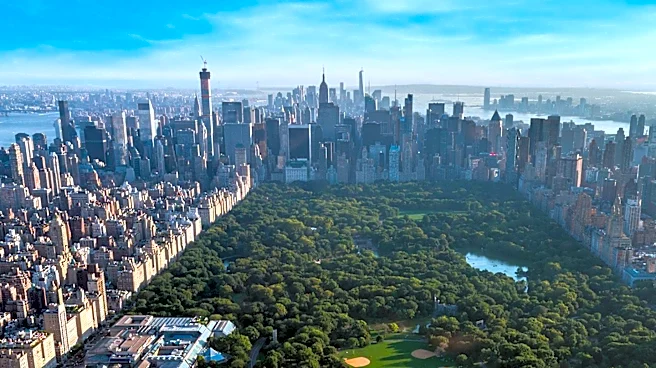
Central Park in New York City is undergoing a significant transformation with a $35.7 million North End Recirculation Project. This initiative aims to convert the 19th-century scenic retreat into an active 'stormwater sponge' to combat flooding and conserve
water. Historically, the park's northern waterways, including The Pool, The Loch, and The Harlem Meer, have required approximately 175 million gallons of municipal drinking water annually to maintain their levels during dry spells. Conversely, during severe storms, heavy runoff from the park and adjacent streets overwhelms local storm sewers, leading to flooding in basements, subway entrances, and avenues in Central and East Harlem. The project, described by NYC Mayor Zohran Mamdani as an act of 'civic waterbending,' seeks to manage water flow more effectively. It involves a closed-loop recirculation system where water from the Harlem Meer is pumped uphill to The Pool and then flows back down through The Loch, naturally filtering and circulating the water. Additionally, park managers will lower the water level of the Harlem Meer before anticipated heavy storms to create capacity for incoming runoff, preventing it from flooding surrounding neighborhoods.
Why It's Important?
This project is crucial for both environmental sustainability and urban resilience in New York City. By implementing a closed-loop recirculation system, Central Park will significantly reduce its reliance on municipal drinking water, conserving a vital resource. More importantly, the transformation into a 'stormwater sponge' directly addresses the escalating issue of urban flooding, particularly in vulnerable communities like East Harlem. The project is expected to keep 132 million gallons of stormwater out of neighborhood sewers annually, representing a 90% reduction in sewer runoff from this watershed. This will mitigate the damage to homes and infrastructure, improve public health by preventing sewage-laden water from entering streets, and enhance the overall quality of life for residents. It also sets a precedent for how green spaces can be reimagined as critical infrastructure in the face of climate change, offering a model for other urban areas grappling with similar challenges. The initiative highlights the importance of integrating ecological solutions with urban planning to create more resilient and equitable cities.
What's Next?
The North End Recirculation Project is already underway, with the goal of transforming Central Park's northern section into a functional stormwater management system. Following the completion of this project, other public green spaces in New York City and potentially other urban areas may consider adopting similar strategies. The success of this initiative could lead to increased investment in 'green infrastructure' projects that leverage natural systems to address urban challenges like water conservation and flood control. Stakeholders, including environmental groups, urban planners, and community advocates, will likely monitor the project's effectiveness in reducing flooding and conserving water. The city may also explore further opportunities to integrate dynamic infrastructure, such as smart valves and retention ponds, into its broader stormwater management strategy. The project's long-term impact will be assessed based on its ability to protect communities, especially those most at risk, from the intensifying effects of climate change.
Beyond the Headlines
Beyond its immediate environmental and infrastructural benefits, this project signifies a deeper shift in how urban spaces are perceived and utilized. It challenges the traditional view of parks solely as aesthetic or recreational areas, repositioning them as active, protective elements within the urban ecosystem. This 'green infrastructure' approach underscores an ethical responsibility to design cities that are not only beautiful but also resilient and equitable, particularly for communities disproportionately affected by environmental hazards. The project also highlights the potential for innovative solutions that blend historical landscape design with modern engineering to address contemporary challenges. It encourages a re-evaluation of existing urban features, such as decorative water bodies, to identify opportunities for multi-functional design that serves both ecological and societal needs. This initiative could inspire a broader cultural shift towards valuing and investing in nature-based solutions as integral components of urban development and climate adaptation strategies.