




What's Happening?
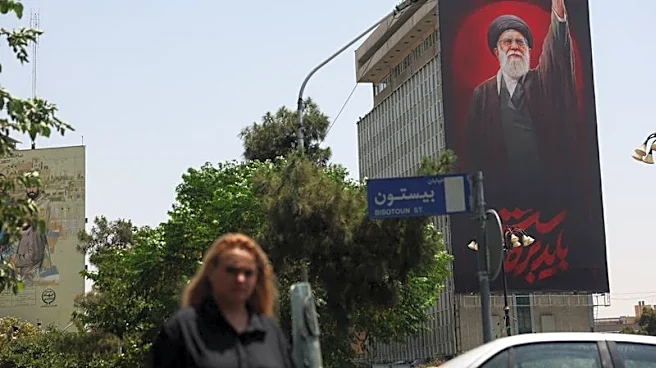
President Trump has stated that Iran is eager to engage in talks with the U.S., claiming the country is 'getting decimated.' However, experts suggest a different scenario, noting that Iran's Islamic Revolutionary Guard Corps is consolidating power. The
previously negotiated deal over the Strait of Hormuz has fallen apart, and informal Track II diplomacy efforts continue between U.S. experts and Iranian counterparts. Despite some direct contacts facilitated by countries like Pakistan and Qatar, substantial diplomatic engagements remain limited.
Why It's Important?
The contrasting views on Iran's willingness to negotiate highlight the complexities of U.S.-Iran relations. The situation underscores the challenges in diplomatic negotiations, particularly when both sides are confident in their military strategies. The ongoing tensions have significant implications for regional stability and global oil markets, as the Strait of Hormuz is a critical passage for oil shipments. The U.S. administration's approach to negotiations and military pressure could influence future diplomatic efforts and regional alliances.
What's Next?
The future of U.S.-Iran relations remains uncertain, with potential for both escalation and diplomatic resolution. The U.S. may need to strengthen its negotiating team to facilitate more effective talks. The outcome of these efforts could impact the broader geopolitical landscape, including U.S. relations with other Middle Eastern countries and global energy markets. Observers will be watching for any shifts in Iran's strategy or changes in U.S. policy that could alter the current trajectory.