






What's Happening?
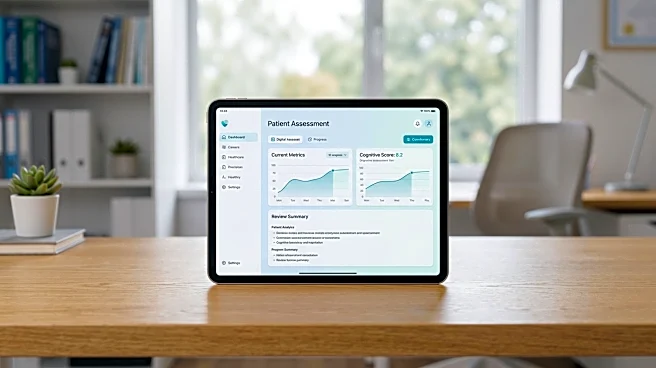
Fold Health is deploying AI agents to automate various healthcare workflows, including reading faxes, forms, and lab results, as well as managing intake, care plan check-ins, and preventive reminders. These AI agents operate within established protocols,
handling calls, texts, and paperwork, while clinical decisions are routed to assigned clinicians. The system ensures human review for critical tasks; for instance, a coordinator confirms every Health Risk Assessment (HRA) after AI agents read the forms into a plan's template. The autonomy of AI agents is strictly controlled by clinical and operations leads, who set guardrails and approve every version before deployment. Licensed steps within workflows remain under human control. This approach aims to enhance efficiency in tasks such as welcoming new members, sorting clinical inboxes, and building care plans from health risk assessments, particularly for special needs plan members.
Why It's Important?
The implementation of AI agents by Fold Health signifies a significant step towards optimizing healthcare operations and improving patient care efficiency. By automating routine and administrative tasks, healthcare professionals can dedicate more time to direct patient interaction and complex clinical decisions. This is particularly important in scenarios like managing thousands of new members or handling a high volume of clinical correspondence, where staff often face time constraints. The human oversight embedded in Fold Health's system ensures that AI acts as a supportive tool rather than a replacement for clinical judgment, maintaining quality and safety standards. This model could alleviate staff burnout, reduce operational costs, and ultimately lead to more timely and personalized patient care, especially in value-based care networks where efficient care plan management is crucial.
What's Next?
Fold Health's approach suggests a future where AI agents will increasingly handle the logistical and data-processing aspects of healthcare, allowing human staff to focus on higher-level clinical and interpersonal tasks. The company is actively showcasing how AI agents and human teams can collaborate, indicating a push for broader adoption of these technologies. The emphasis on configurable autonomy and human approval for AI actions suggests that future developments will likely focus on refining these guardrails and expanding the range of tasks AI can assist with, while always ensuring clinical accountability. This model could become a blueprint for other healthcare providers looking to integrate AI without compromising patient safety or the human element of care.
Beyond the Headlines
The deployment of AI in healthcare workflows raises deeper questions about the evolving roles of healthcare professionals and the ethical implications of automated decision-making, even with human review. While efficiency gains are clear, the potential for over-reliance on AI or subtle biases in algorithms could impact patient outcomes. Furthermore, the integration of AI agents necessitates robust cybersecurity measures to protect sensitive patient data. The success of such systems will depend not only on technological sophistication but also on effective training for human staff, clear protocols for AI interaction, and ongoing evaluation of patient safety and satisfaction. This development marks a significant shift towards a hybrid model of healthcare delivery, where technology and human expertise are intricately intertwined.