



What's Happening?
California Governor Gavin Newsom's recent visit to Michigan, intended to campaign for down-ballot Democrats, reportedly encountered a less-than-enthusiastic reception from some influential local Democratic figures. According to a report, Rep. Debbie Dingell
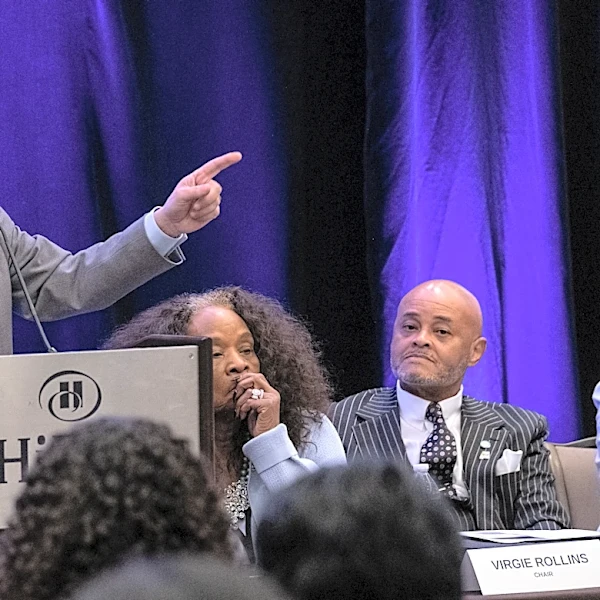
(D-MI) stated to Politico that she did not hear from Governor Newsom during his trip. Dingell's remark, "I didn't expect to: I'm a car girl," was widely interpreted as a subtle but pointed reference to California's stringent fuel emission standards, which have significant implications for Michigan's auto industry, a cornerstone of its economy. The visit also saw other reported missteps, including Newsom not meeting with Virgie Rollins, the influential chair for the Democratic National Committee’s Black Caucus, despite a liaison reportedly inviting Rollins to a chat. Rollins noted that "Every Democratic president that has won an election has been in my house," highlighting the perceived oversight. Additionally, two fundraisers were canceled: one after Newsom learned of controversial remarks made by the host, and another citing a "small donor base." Despite these challenges, Newsom's team portrayed the visit as a success, emphasizing meetings with figures like Gov. Gretchen Whitmer and U.S. Sen. Elissa Slotkin, and promising to schedule follow-up meetings with those he missed.
Why It's Important?
This incident highlights the complexities of national political figures engaging with local party dynamics, particularly in a crucial swing state like Michigan. Rep. Dingell's comment about being a "car girl" underscores the deep-seated economic interests and sensitivities surrounding the auto industry in Michigan. California's environmental policies, while progressive and aimed at addressing climate change, can create significant friction with states whose economies are heavily reliant on traditional manufacturing sectors and internal combustion engine vehicles. The perceived snub of key local figures like Dingell and Virgie Rollins, a long-standing powerbroker, could hinder efforts to build broad-based support for national Democratic initiatives or future presidential bids. For Governor Newsom, who is widely anticipated to run for president in 2028, securing strong relationships and avoiding missteps in early battleground states like Michigan is crucial for accumulating political capital and demonstrating national appeal. The lukewarm reception suggests that national candidates must carefully navigate local economic concerns and established political networks to avoid alienating potential allies and ensure effective outreach.
What's Next?
Governor Newsom's team has indicated plans to schedule follow-up meetings with Michigan Democrats he did not meet during his recent visit, including Virgie Rollins. This suggests an effort to mend any perceived slights and strengthen relationships within the state's Democratic party, acknowledging the importance of local endorsements and support. Future engagements by national political figures in Michigan will likely be scrutinized for their ability to connect with diverse local stakeholders and address state-specific economic concerns, particularly those related to the auto industry and its workforce. For Rep. Dingell and other Michigan Democrats, their continued focus will be on advocating for their state's economic interests, which may sometimes diverge from the policy priorities of national party figures. The incident serves as a reminder that successful political outreach requires careful consideration of local contexts, established political networks, and a nuanced understanding of regional economic drivers to build effective coalitions.
Beyond the Headlines
The friction observed during Governor Newsom's Michigan visit points to a broader challenge within the Democratic Party: balancing national progressive policy goals with the economic realities and political sensitivities of diverse states. California's leadership on environmental regulations, while lauded by some, can be viewed with skepticism or concern in states like Michigan, where the transition away from fossil fuels and traditional manufacturing has significant economic and social implications for thousands of workers and their communities. This dynamic can create internal party divisions, requiring careful coalition-building and communication strategies that acknowledge and address these regional differences. The incident also subtly highlights the enduring power of local political figures and their ability to influence perceptions of national candidates. It underscores that even prominent national figures must earn the trust and support of grassroots leaders and established powerbrokers in critical states, rather than assuming automatic alignment based solely on party affiliation.