


What's Happening?
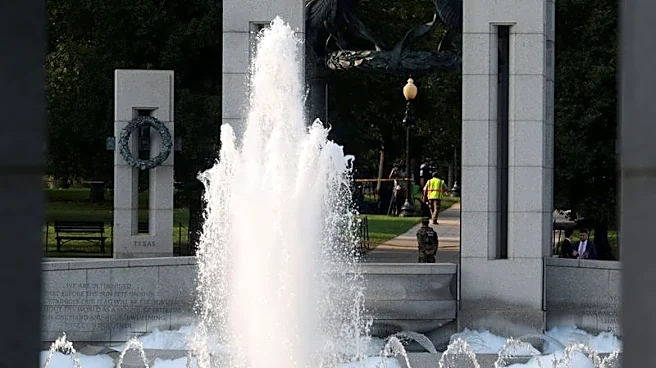
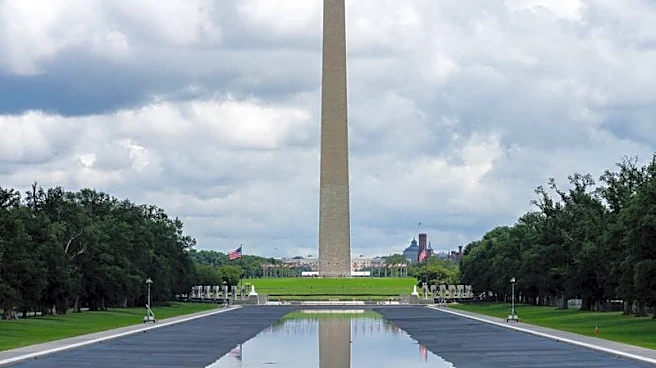
The World War II Memorial on the National Mall in Washington, D.C., was vandalized with graffiti and bubbles in a fountain. This incident occurred weeks after President Trump had blamed vandalism for damage to the nearby Lincoln Memorial Reflecting Pool,
a claim he made without providing evidence. U.S. Attorney for the District of Columbia Jeanine Pirro had previously announced felony charges against an individual for the Reflecting Pool damage, but later moved to dismiss the case, stating that evidence refuted the idea that vandals were to blame and instead pointed to botched repairs. Pirro criticized the Interior Department for providing "less than fulsome information at the outset of the case." In response, Interior Secretary Doug Burgum appeared to push back against Pirro's criticism, claiming in a social media post that some acts of vandalism were captured on video, suggesting a different narrative regarding the Reflecting Pool incident.
Why It's Important?
This situation highlights a significant disagreement between federal agencies regarding the cause and handling of damage to national monuments, particularly between the U.S. Attorney's office and the Department of the Interior. The differing accounts — whether damage was due to vandalism or shoddy repairs — have political implications, especially given President Trump's strong assertions about vandalism. The public exchange between Pirro and Burgum underscores potential tensions within the administration and raises questions about the transparency and accuracy of information provided by federal departments. This controversy could impact public trust in official investigations and the management of national heritage sites, as well as influence future responses to acts of vandalism or damage on federal property. The incident also brings to the forefront the challenges of maintaining and protecting iconic national memorials.
What's Next?
Following the vandalism at the World War II Memorial, an arrest has been made, and charges are being filed against Melissa L. Farris. The U.S. Park Police and the Interior Department have stated their commitment to finding those responsible for such acts. The ongoing disagreement between U.S. Attorney Jeanine Pirro and Interior Secretary Doug Burgum regarding the Lincoln Memorial Reflecting Pool case may continue to unfold, potentially leading to further public statements or internal reviews. The broader implications for how federal agencies communicate and coordinate on investigations involving national monuments will likely be scrutinized. This series of events could prompt a reevaluation of security measures and maintenance protocols for national memorials in Washington, D.C., to prevent future incidents and ensure clear accountability.
Beyond the Headlines
The incidents of vandalism and the subsequent inter-agency dispute reveal deeper issues concerning the politicization of federal investigations and the narrative control surrounding events impacting national symbols. The differing explanations for the Reflecting Pool damage — from President Trump's initial claims of vandalism to Pirro's eventual conclusion of botched repairs, and Burgum's counter-claim of video evidence — illustrate how facts can become contested in a politically charged environment. This situation underscores the importance of objective evidence and transparent communication from government bodies to maintain public confidence. It also highlights the vulnerability of national monuments, not just to physical damage, but also to becoming focal points for political debate and conflicting interpretations, thereby affecting their symbolic integrity and the public's perception of national heritage.