


What's Happening?
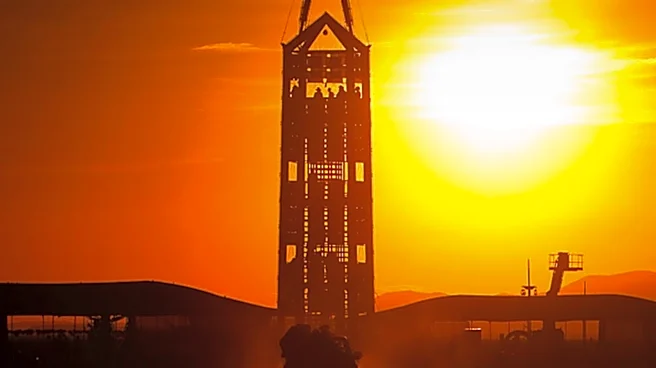
One individual among the approximately 70,000 attendees at the Burning Man festival in Nevada's Black Rock Desert has died after experiencing a medical emergency. According to a Thursday statement from the Burning Man Project, the man, described as being
in his mid-50s, received immediate lifesaving measures on-site before being transported to the festival's medical facility. He was pronounced dead at the facility. The nature of the medical emergency and the identity of the attendee have not been disclosed by the organizers. The Pershing County Sheriff Jerry Allen indicated that foul play does not appear to be a factor in the death. This incident occurred during the week-long festival, which commenced on Sunday and is scheduled to conclude on Labor Day. The festival has recently experienced heavy rain and wind, leading to temporary gate closures, but organizers have stated that the death does not seem to be related to the weather conditions.
Why It's Important?
The death at Burning Man underscores the inherent risks associated with large-scale, remote gatherings, even with on-site medical provisions. Such incidents can prompt increased scrutiny from local authorities and public health officials regarding safety protocols, emergency response capabilities, and overall event management. For attendees, it serves as a somber reminder of the potential dangers in extreme environments. For event organizers, it can lead to reputational damage and potentially trigger reviews of their operational procedures, insurance liabilities, and crisis communication strategies. The incident may also influence future attendance or regulatory oversight, particularly if there are calls for more stringent health and safety measures at similar events held in remote or challenging locations. The lack of disclosed details about the medical emergency could also fuel speculation and concern among the public and future participants.
What's Next?
Authorities, including the Pershing County Sheriff's Office, will likely continue their investigation into the exact cause of death, though foul play has been ruled out. The Burning Man Project may face internal reviews of its emergency response protocols and medical services to identify any areas for improvement. Depending on the findings, there could be calls for enhanced medical staffing, equipment, or communication systems at future events. The incident might also lead to discussions among festival organizers and local government bodies about the responsibilities and requirements for ensuring attendee safety at large gatherings in remote desert environments. Public statements from the Burning Man Project are expected to continue to address the incident, offering condolences and potentially providing updates as more information becomes available.
Beyond the Headlines
This incident highlights the complex logistical and ethical challenges of hosting a temporary city of tens of thousands in a harsh desert environment. Beyond immediate medical response, it brings into focus the broader welfare infrastructure required, including mental health support, hydration, and environmental hazard mitigation. The death could spark a wider conversation about the 'leave no trace' ethos of Burning Man, extending it to human impact and safety. It also touches upon the psychological contract between attendees and event organizers, where participants often embrace a degree of personal risk in exchange for a unique experience. The event's counter-culture roots often emphasize self-reliance, but incidents like this inevitably push organizers to balance that ethos with robust safety nets, potentially altering the festival's character over time.